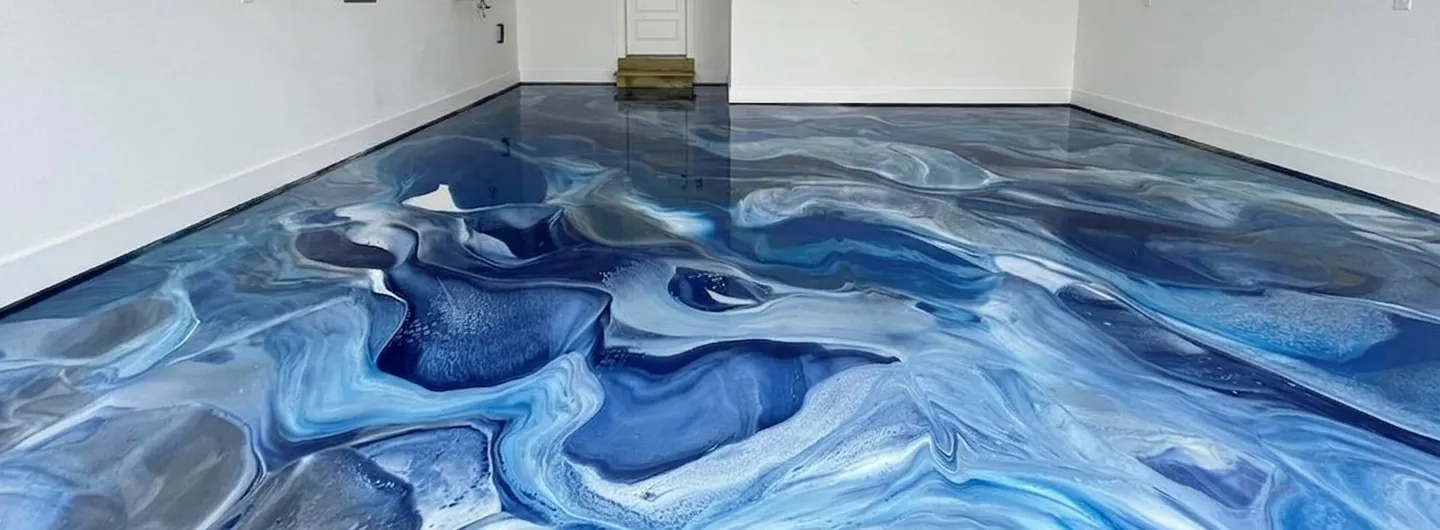
The Complete Guide to Metallic Epoxy Garage Floors in Florida
A metallic epoxy garage floor is one of the highest-impact upgrades you can make to a Florida home. It turns a dusty, stained slab into a glossy, showroom-quality surface that looks more like polished stone than a garage. But it's also a system that's easy to get wrong. This guide walks you through everything you should understand before you invest.
What Metallic Epoxy Actually Is
Metallic epoxy is a multi-layer resin system. A pigmented epoxy base coat is poured, then metallic mica pigments suspended in a clear epoxy are applied on top and manipulated with solvents, leaf blowers, and trowels to create flowing, three-dimensional patterns. A clear polyurethane or polyaspartic top coat seals everything and provides the wear resistance.
The result is a floor with real visual depth — swirls, lenses, and "river" effects that no two installs ever reproduce exactly. Every metallic floor is genuinely one of a kind.
Why Metallic Epoxy Works So Well in Florida
Florida is a demanding environment for any floor coating, and three factors matter most:
- Heat: Garage slabs in Central Florida regularly exceed 95°F. Quality epoxy and polyaspartic top coats are rated well beyond that, but cheap products soften and print under hot tires.
- Humidity: Our slabs hold moisture. Moisture vapor transmission is the number-one cause of epoxy delamination in this state, which is why testing and the right primer are non-negotiable.
- UV exposure: Sun through an open garage door yellows low-grade clear coats within a year. A UV-stable polyaspartic top coat keeps the color true.
Handled correctly, metallic epoxy is arguably better suited to Florida than to colder climates — there's no freeze-thaw cycle to fight.
Color and Design Options
The design conversation is the fun part. Popular directions we install include:
- Ocean blue and pearl — bright, clean, and the most requested in coastal areas.
- Charcoal and silver — a modern, neutral look that hides dust between cleanings.
- Copper, bronze, and gold — warm tones that pair beautifully with wood accents.
- Custom blends — we'll mix to match a brand color, a countertop, or a sample you bring us.
We always recommend approving a physical sample board in your own lighting before installation day. Metallic pigments shift dramatically between fluorescent, LED, and natural light.
What the Installation Process Looks Like
A professional metallic garage floor is typically a multi-day job:
- Day 1 — Preparation. Diamond grinding or shot blasting to open the concrete, full crack and joint repair, and moisture testing.
- Day 1–2 — Base coat. A pigmented epoxy primer/base is applied and allowed to cure.
- Day 2 — Metallic coat. The artistic layer. This is where experience matters most — the effect is created in a single working window that can't be redone.
- Day 3 — Top coat. One or two coats of UV-stable polyaspartic or polyurethane.
Rushed timelines are the most common reason a metallic floor looks "muddy." Each layer needs its full cure window, especially in humid conditions.
Plan on keeping vehicles off the floor for several days after the final coat, even though it's walkable much sooner.
How Long It Lasts
A properly installed metallic epoxy system with a polyaspartic top coat will typically last 15–20 years in a residential garage before it needs a refresh coat — not a full replacement. The top coat is the wear layer, so a single re-coat down the road restores it without disturbing the artwork beneath.
Cost Expectations
In Florida, metallic epoxy garage floors generally run higher than flake or solid-color systems because of the artistry and the premium top coat involved. The biggest cost variables are the condition of your existing slab (cracks and prior coatings add prep time) and total square footage. We cover pricing in depth in our Florida epoxy cost guide.
How to Choose the Right Contractor
Metallic epoxy is the system where the installer matters more than the product. When you're vetting contractors, ask:
- Do they diamond grind or shot blast — not acid etch — to prep?
- Do they perform a moisture test and stand behind the result?
- Can they show you real, in-progress photos of their own metallic work (not stock images)?
- Are they licensed and insured in Florida?
- Do they provide a written warranty?
If a quote is dramatically cheaper than everyone else's, that gap is almost always coming out of surface prep or top-coat quality — the two things that determine whether your floor lasts two years or twenty.
Ready to Transform Your Floor?
LuxeVita Epoxy LLC installs premium epoxy flooring across Brooksville, Tampa, and all of Central & West Florida. Every job is licensed, insured, and backed by professional surface preparation. Get a free, no-obligation quote today — we respond within 24 hours.
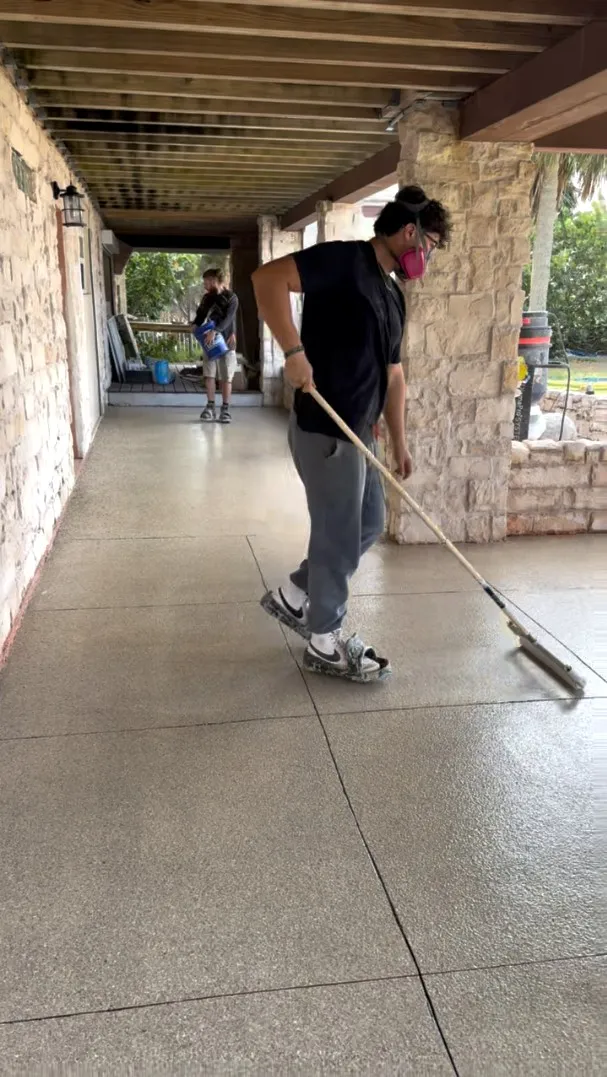
Jake McIlrath
Owner & Lead Installer, LuxeVita Epoxy LLC
Jake leads every LuxeVita install personally, bringing hands-on experience with Florida slabs, climate, and the prep that makes epoxy last. He writes here to help homeowners and businesses make informed flooring decisions.
Related Articles
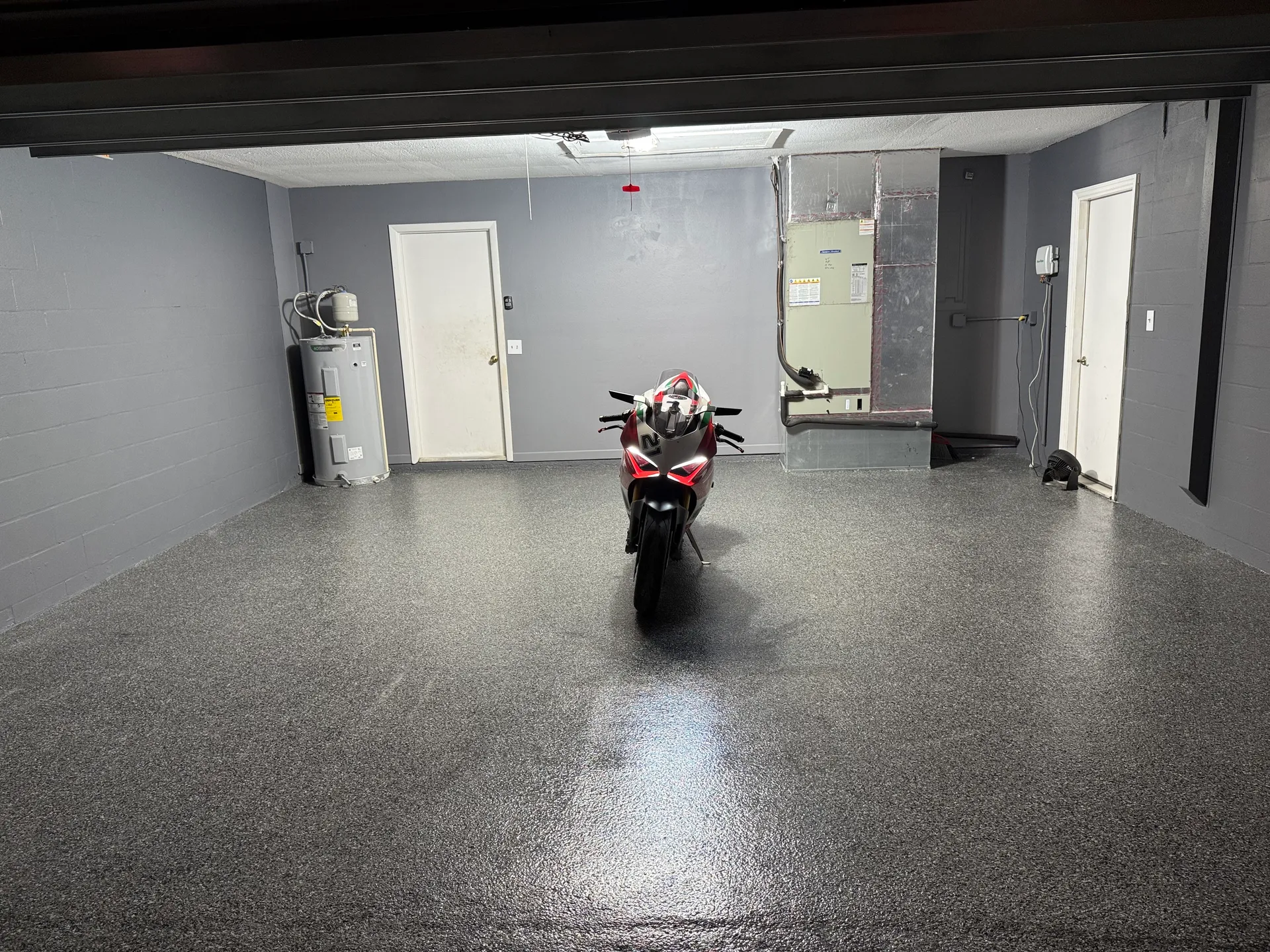
Polyaspartic vs Epoxy Garage Floors in Florida: Which Actually Lasts Longer?
Polyaspartic vs epoxy in Florida garages: which actually lasts longer under UV, humidity, and heat? A Brooksville installer breaks down the honest answer.
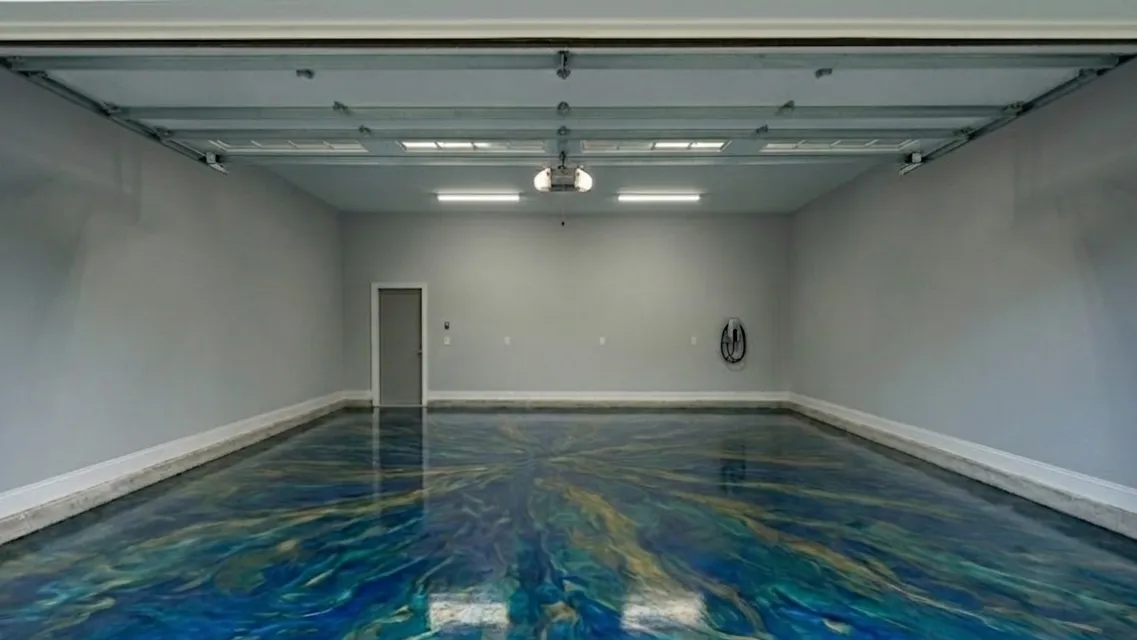
How Long Does Epoxy Flooring Actually Last in Florida? An Honest Lifespan Guide
How long does epoxy flooring last in Florida? An honest answer: 15-20+ years for pro systems, 2-4 for DIY kits. Here's what really drives lifespan.
Commercial Kitchen & Restaurant Epoxy Flooring in Florida: Code, Drainage, and Slip Ratings
NSF/FDA-compliant commercial kitchen epoxy for Florida restaurants: slip ratings, cove base, drainage, and weekend installs that pass DBPR inspection.
Ready to Transform Your Floor?
Get a free, no-obligation quote today. We respond within 24 hours.