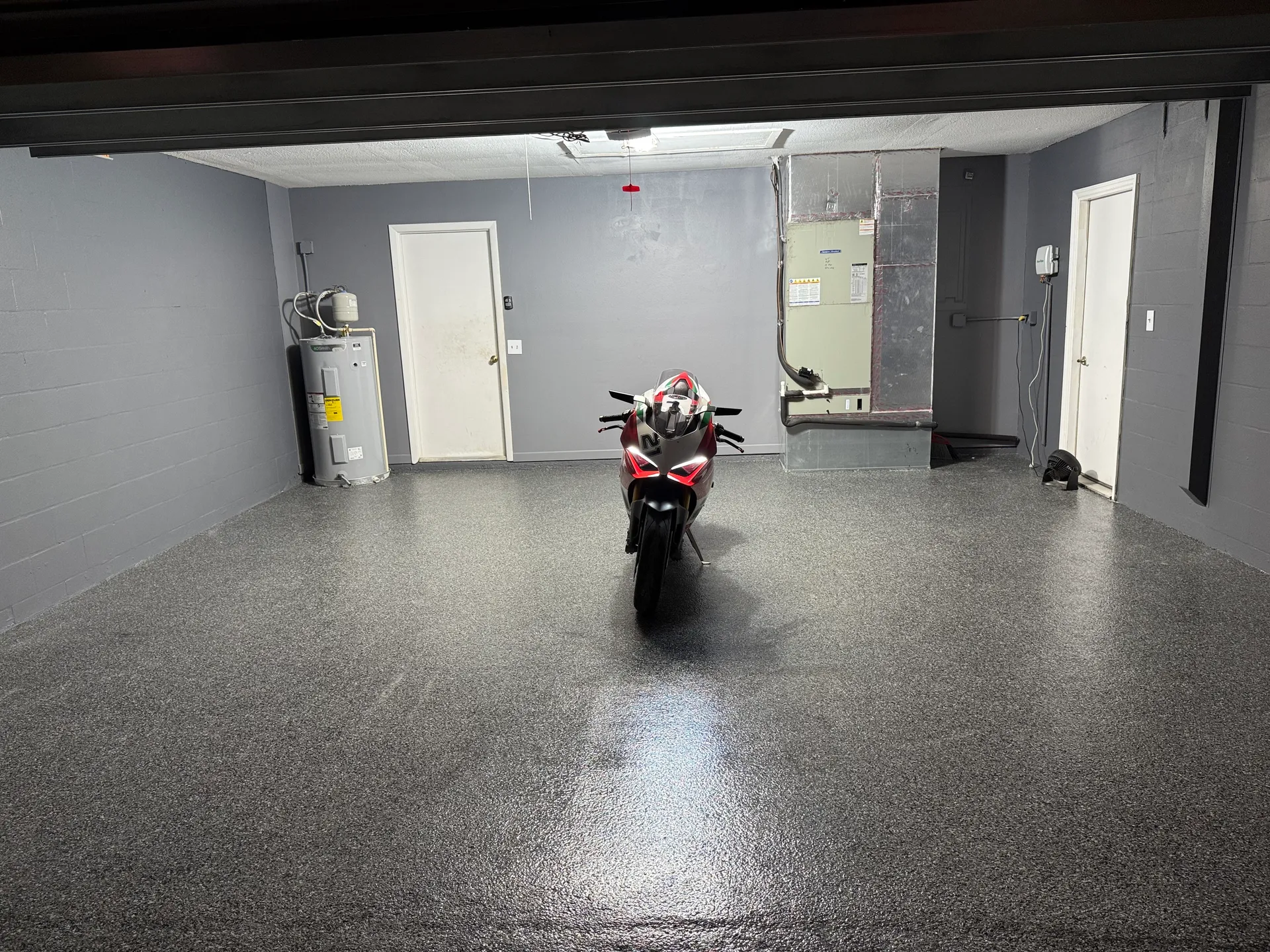
Polyaspartic vs Epoxy Garage Floors in Florida: Which Actually Lasts Longer?
If you're shopping for a garage floor coating in Florida, you've almost certainly run into the polyaspartic vs epoxy debate — and most contractors will push whichever one they happen to install. Here's the honest answer from someone who installs both: polyaspartic outlasts epoxy as a top coat in our climate, but the best Florida garage floors actually use both materials in a single hybrid system. The reason has everything to do with UV, humidity, and how each chemistry reacts to Brooksville and Tampa summers.
What Is Polyaspartic Coating?
Polyaspartic is an aliphatic polyurea — a fast-curing, UV-stable coating originally developed in the 1990s for bridges and steel infrastructure. It cures by reacting with moisture in the air, which sounds like a problem in humid Florida but is actually the opposite. The reaction is predictable, and a skilled installer can dial the working window from 15 minutes to about 45.
The two properties that matter most for a garage: it's UV-stable, meaning it won't yellow or chalk under direct sun, and it cures fast — most polyaspartic top coats are foot-traffic ready in 1–2 hours and vehicle-ready in 24. That's how a reputable installer can do a one-day garage floor.
There's also a flexibility advantage that doesn't get talked about enough. Polyaspartic stays slightly elastic after it cures, which lets it move with the concrete underneath as a slab expands and contracts through Florida's daily 30-degree temperature swings. Rigid coatings crack along that expansion line; polyaspartic absorbs it.
What Is Epoxy?
Epoxy is a two-part thermoset resin (resin + amine hardener) that's been the workhorse of concrete coatings since the 1960s. It penetrates deep into properly prepped concrete and forms an incredibly strong mechanical bond — that bond is the reason epoxy is still the gold standard for the base coat of almost every premium garage system, including ours.
The weakness of epoxy is the same thing that gives it its toughness. It's aromatic, meaning the carbon ring structure that makes it hard also reacts with UV light. Sun exposure breaks those bonds and the floor yellows, chalks, and eventually fails at the surface. Cure times are slow (16–24 hours between coats), and in a humid garage the amine hardener can blush — leaving a hazy, sticky film that has to be sanded out.
Worth saying clearly: epoxy isn't bad. I install thousands of square feet of it every year. It just shouldn't be the layer your tires touch in Florida. Used as a base coat under a UV-stable top coat, it's still the best material we have for binding a coating to concrete.
Side-by-Side Comparison
Here's how the two materials stack up on the attributes that actually matter for a Florida garage. These numbers are from systems I've installed myself across Hernando, Pasco, and Hillsborough counties.
| Attribute | Epoxy | Polyaspartic |
|---|---|---|
| Cure time per coat | 16–24 hours | 1–2 hours |
| Full install time | 2–3 days | 1 day possible |
| UV resistance | Poor — yellows in 2–5 years | Excellent — does not yellow |
| Hot tire pickup | Vulnerable on cheap kits | Highly resistant |
| Chemical resistance | Very good | Excellent |
| Abrasion resistance | Good | Excellent (about 4x epoxy) |
| Slip resistance | Depends on broadcast media | Depends on broadcast media |
| Bond to bare concrete | Excellent (deep penetration) | Good, but shallower |
| Humidity tolerance during install | Sensitive — amine blush risk | Tolerant — moisture-cured |
| Installed cost (Florida) | $4–$9 per sq ft | $7–$12+ per sq ft |
| Realistic lifespan | 3–7 years as top coat | 15–20 years as top coat |
Notice the bond-to-concrete row — that's the single biggest argument for not using polyaspartic alone. It bonds well, but epoxy bonds better. That's why the strongest systems combine them. Anyone selling you a single-coat polyaspartic floor sprayed directly onto bare concrete is gambling with the bond, and in Florida the slab telegraphs every shortcut. Moisture vapor rising from the concrete will find the weakest point in a thin-film system within a year or two.
The cure time row is the one that surprises homeowners most. Two days versus one is the difference between parking in your garage Tuesday night or Friday night, and for families with two working drivers that's not nothing. It's also why polyaspartic dominates commercial work where every hour of closure is lost revenue.
How Florida Climate Changes the Answer
In most of the country, this comparison is closer than it looks on paper. In Florida, it isn't close. Three local factors hammer epoxy specifically and reward polyaspartic.
UV intensity. Central and West Florida averages a UV index of 9–11 for roughly seven months a year. If your garage door faces south or west, or you have skylights or transom windows, an aromatic epoxy top coat will visibly amber within 18–36 months. I've redone two-year-old DIY epoxy floors in Spring Hill where the strip in front of the open garage door looked like a different color than the back half. Polyaspartic doesn't do that.
Humidity and amine blush. An epoxy garage floor installed at 80°F and 75% relative humidity — basically any summer morning in Tampa — is one bad cure away from a blushed, hazy surface. Polyaspartic actually uses ambient moisture as part of its cure, so high humidity is a non-issue and often a benefit.
Heat and hot tire pickup. A black asphalt driveway in Brooksville can put 160°F tires onto your garage floor. Hot tires soften and pull at coatings; cheap epoxy gives up and you get black ring-shaped lifts where the tires sit. Polyaspartic is dramatically more resistant — I've never had a hot tire callback on a properly installed polyaspartic top coat.
Salt air, on coastal jobs. If you're within a few miles of the Gulf in Pasco or Hernando County, your concrete is getting hit with chloride-laden air every night. Both materials handle salt exposure well once cured, but polyaspartic's chemical resistance gives it a clear edge in coastal garages where the door spends a lot of time open.
Cost Difference: What You're Actually Paying For
Real, current Florida pricing — not the "$2 per square foot" you'll see on some sketchy ads:
- Solid color epoxy with epoxy top coat: $4–$6 per sq ft. Budget-friendly, but expect to recoat in 5–7 years.
- Epoxy flake with epoxy or polyurethane top coat: $5–$9 per sq ft.
- Epoxy base + polyaspartic flake top coat (hybrid): $7–$10 per sq ft. The sweet spot for most Florida garages.
- Full polyaspartic flake or quartz system: $9–$12+ per sq ft. One-day install, longest lifespan.
Why does polyaspartic cost more? Three reasons. First, the raw material is roughly 2–3x the cost of epoxy per gallon. Second, the short working window means it requires a faster, more experienced crew — you can't take a coffee break in the middle of a polyaspartic coat. Third, the polyaspartic systems we offer use premium broadcast media (full-broadcast vinyl chip or quartz aggregate), which costs more than the thin flake blends you'd see in a budget epoxy kit.
The cost per year of life is where polyaspartic actually wins. A $5 per square foot epoxy floor that needs replacement in five years costs about $1 per sq ft per year. A $9 per square foot hybrid that lasts 18 years costs around $0.50 per sq ft per year — half as much, and you only live through the install dust once. For a full picture of what drives pricing in this market, we wrote an honest cost breakdown for Florida homeowners.
What About the Slip Resistance Question?
One of the most common objections I hear is "I don't want a slick garage floor." Good news — slip resistance has almost nothing to do with whether you choose epoxy or polyaspartic, and almost everything to do with what gets broadcast into the floor. Vinyl flake, quartz aggregate, or a fine anti-slip additive in the top coat is what gives you grip.
A naked polyaspartic top coat in a high-gloss finish is, frankly, slick when wet — about like polished tile. The same is true of a high-gloss epoxy. Add a quarter-cup of polymer anti-slip per gallon, or specify a full-broadcast flake or quartz floor, and either system becomes safely textured. We default to a fine anti-slip in the top coat of every flake floor we install in Florida.
Which One Is Right for Your Garage?
After installing both systems across hundreds of garages, here's the decision framework I'd give a friend:
Choose straight epoxy if your garage door stays closed almost all the time, gets no direct sun, and you're optimizing strictly for upfront cost. It's a legitimate budget choice for a fully enclosed, climate-controlled space — think a workshop bay or storage room.
Choose full polyaspartic if downtime matters more than money. We can grind, base, broadcast, and seal your floor in a single day and you can park on it the next morning. Restaurants, retail, and busy households where a 3-day shutdown isn't acceptable lean this direction.
We use hybrid systems — epoxy base, polyaspartic top — for about 80% of Florida garage installs. You get the deep bond and forgiveness of epoxy on the concrete, plus the UV stability, chemical resistance, and longevity of polyaspartic where it matters most: the wear surface. It's the system behind our metallic epoxy systems and almost every flake floor we install. If you're trying to decide on a look as well as a chemistry, our metallic vs flake comparison walks through the visual side of the decision.
A quick warning about the marketplace. There are a lot of one-day garage floor companies in Tampa and Orlando selling "100% polyaspartic" systems at premium prices. Some are excellent. Others are using a thinned-down polyaspartic top with no proper base coat, sprayed over poorly prepped concrete. The chemistry doesn't save a bad install. Ask any installer — us included — to show you their grinder, their moisture test, and a real in-progress photo of a system being built up. The system matters, the prep matters more.
Frequently Asked Questions
Is polyaspartic really better than epoxy in Florida?
For the top coat, yes. Polyaspartic resists UV, heat, and hot tire pickup far better than epoxy under Florida conditions. But epoxy is still the best material for the base layer because it penetrates and bonds deeper into prepared concrete. The strongest Florida systems use both materials in a hybrid build.
How long does a polyaspartic floor last in a Florida garage?
A properly installed polyaspartic top coat over an epoxy base will typically last 15–20 years residentially before needing a single refresh coat — not a full replacement. Straight epoxy in the same garage usually shows visible yellowing, chalking, or hot tire pickup within 3–7 years.
Why does polyaspartic cost more than epoxy?
Three reasons stack up:
- The raw material is roughly 2–3x the cost per gallon.
- The short working window demands a faster, more skilled crew.
- Polyaspartic systems are usually paired with premium broadcast media (full-broadcast flake or quartz), which adds material cost.
Can polyaspartic be installed in one day?
Yes — with cure times of 1–2 hours per coat, a full polyaspartic flake system can be ground, base-coated, broadcast, and sealed in a single day. You can usually walk on it that evening and park on it within 24 hours. Epoxy systems take 2–3 days minimum.
Will polyaspartic yellow in Florida sun?
True aliphatic polyaspartic is UV-stable and will not yellow under direct sun, skylights, or open garage doors. Epoxy is aromatic and will amber or chalk under the same exposure within a few years — one of the most common failure modes we see on DIY epoxy kits in Central Florida.
Ready to Transform Your Floor?
LuxeVita Epoxy LLC installs premium epoxy flooring across Brooksville, Tampa, and all of Central & West Florida. Every job is licensed, insured, and backed by professional surface preparation. Get a free, no-obligation quote today — we respond within 24 hours.
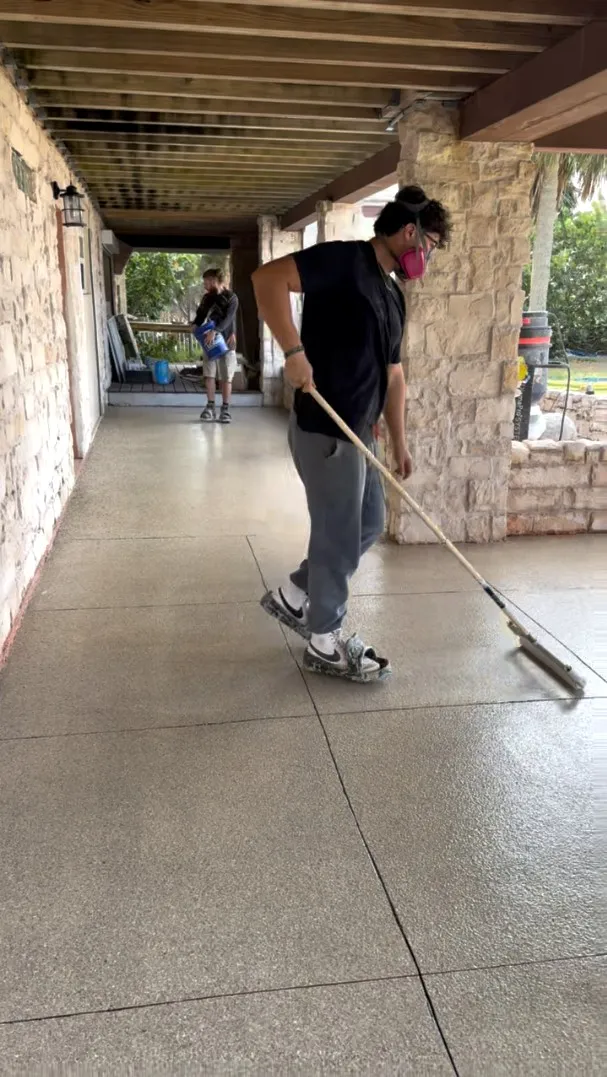
Jake McIlrath
Owner & Lead Installer, LuxeVita Epoxy LLC
Jake leads every LuxeVita install personally, bringing hands-on experience with Florida slabs, climate, and the prep that makes epoxy last. He writes here to help homeowners and businesses make informed flooring decisions.
Related Articles
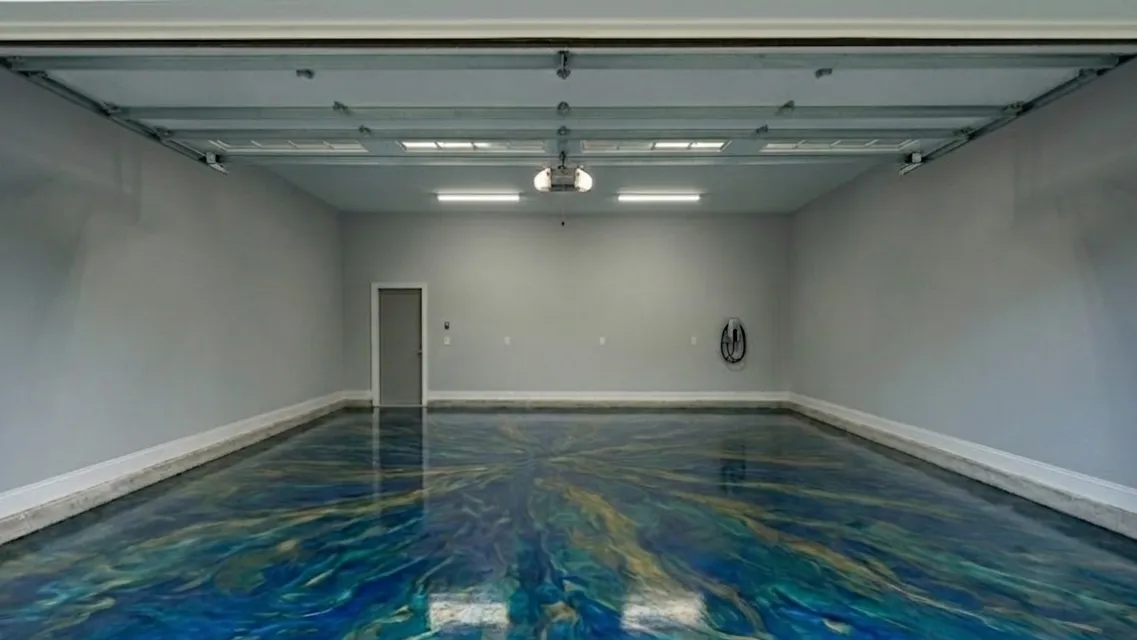
How Long Does Epoxy Flooring Actually Last in Florida? An Honest Lifespan Guide
How long does epoxy flooring last in Florida? An honest answer: 15-20+ years for pro systems, 2-4 for DIY kits. Here's what really drives lifespan.
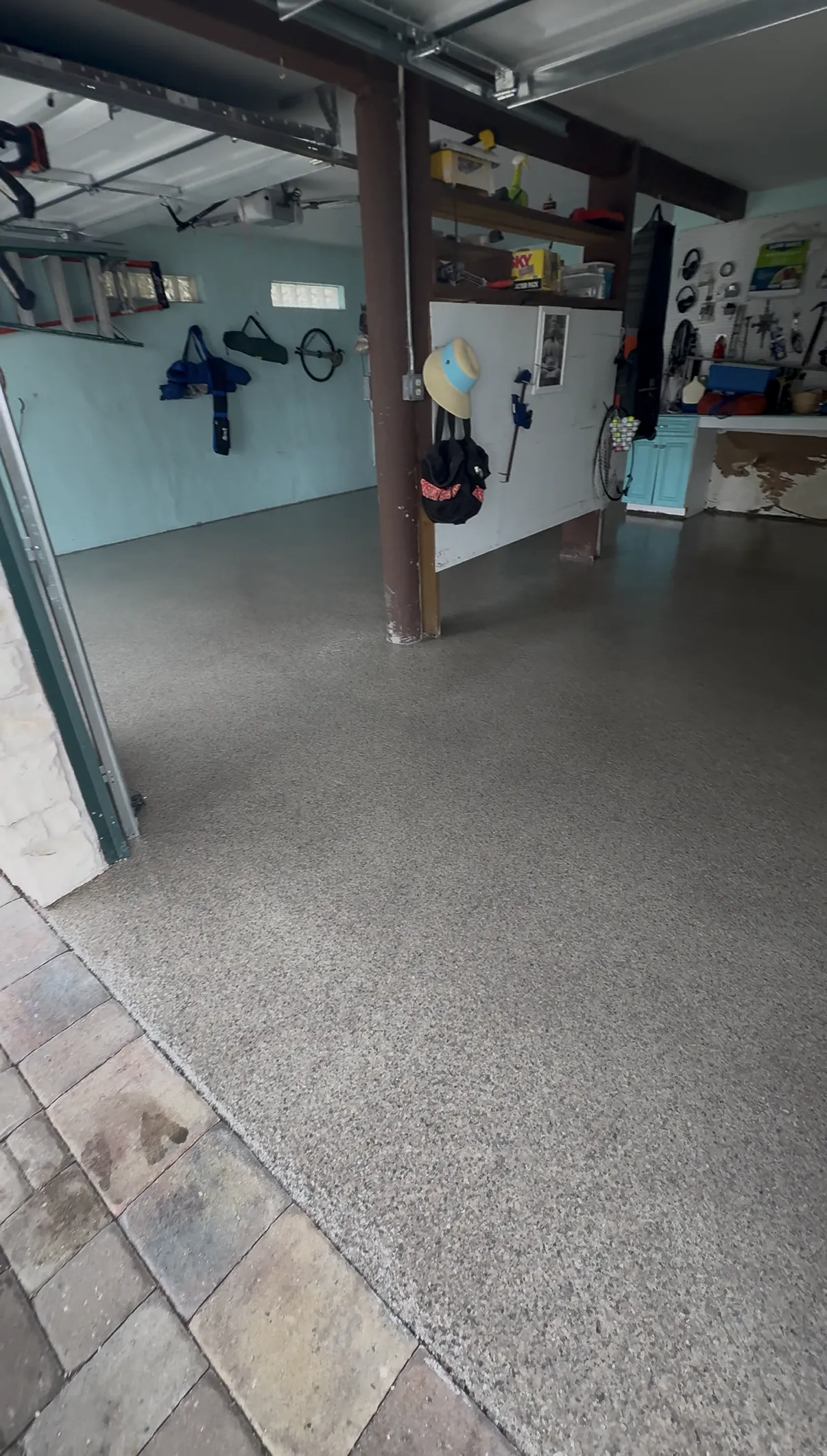
Epoxy Floor Cost Per Square Foot in Florida (2026): Real Pricing by Project Type
Real 2026 Florida epoxy floor cost per square foot, broken down by project type — garages, pool decks, lanais, commercial, with honest dollar ranges.
Lanai Floor Coating: The Florida Patio Upgrade Most Homeowners Overlook
A professional lanai floor coating turns your screened Florida patio into real living space — cooler, cleaner, and built for storms and pollen.
Ready to Transform Your Floor?
Get a free, no-obligation quote today. We respond within 24 hours.