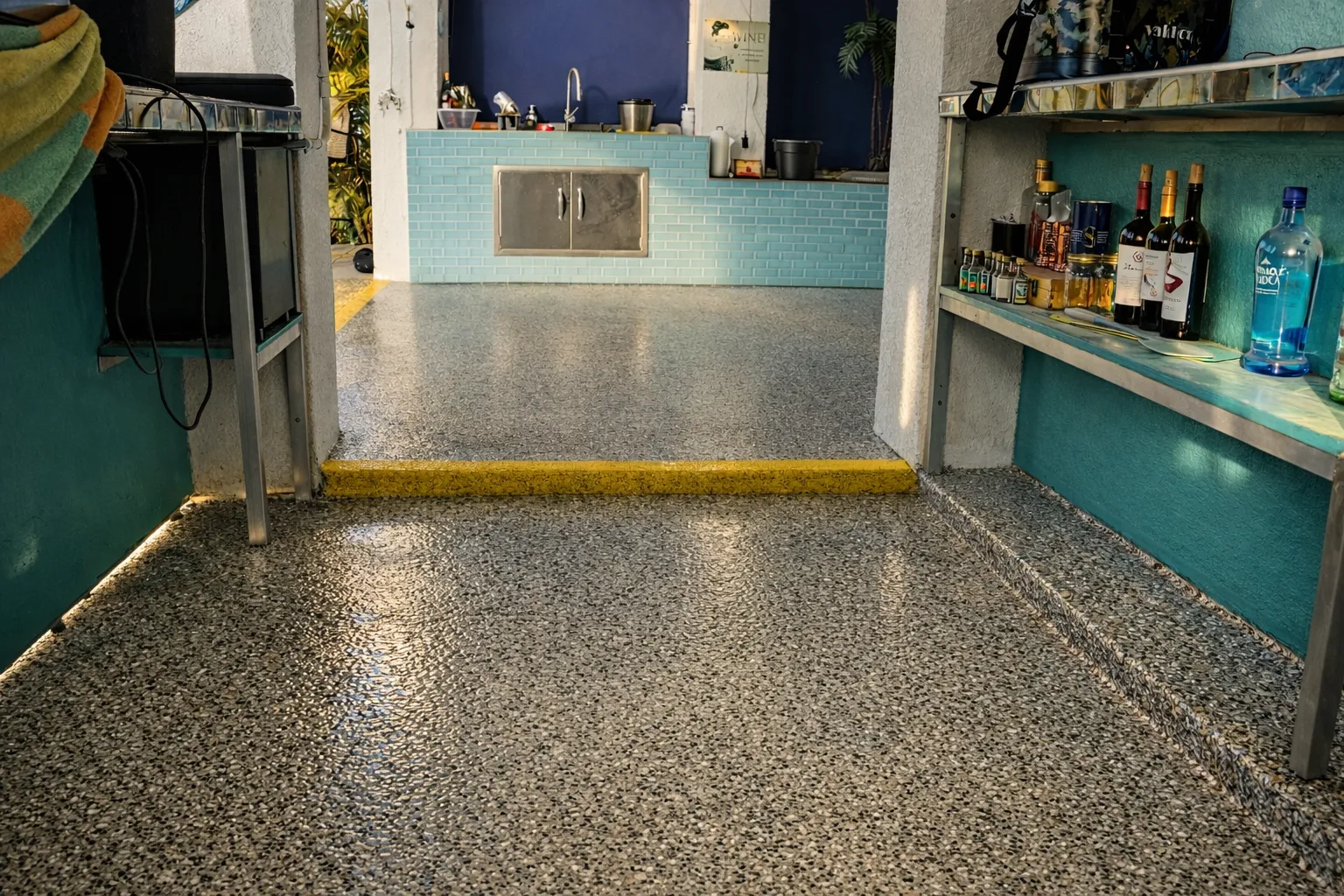
Commercial Kitchen & Restaurant Epoxy Flooring in Florida: Code, Drainage, and Slip Ratings
If you operate a restaurant in Florida, your floor is on the inspector's clipboard before the walk-in cooler is. Commercial kitchen epoxy flooring is the answer most Florida operators land on once they have failed a DBPR inspection over cracked tile, lost a workers' comp claim to a slip-and-fall, or simply gotten tired of regrouting every two years. Done right, a seamless NSF-listed system passes health inspection, kills bacteria harborage, and lasts two decades under a cook line. Done wrong, it peels, yellows, and ends up costing more than the tile it replaced.
This guide walks through what actually matters when you are speccing a kitchen floor in Tampa, Orlando, Jacksonville, or anywhere else in the state: code compliance, slip ratings, drainage, cove base, and how to get it installed without shutting down for a week.
Why Restaurant Floors Fail (and How It Kills Inspections)
Walk into a five-year-old Florida kitchen with quarry tile and you'll see the same failure pattern every time. Grout lines have eroded into shallow channels of black slime. Tiles are loose where the dishwasher splash zone has saturated the thinset. The corner under the fryer is stained a permanent brown from oil that wicked through the grout and into the slab.
None of that is cosmetic. Florida's Food Code, adopted under DBPR, requires floor surfaces in food prep, dishwashing, and walk-in areas to be smooth, durable, nonabsorbent, and easily cleanable. Eroded grout is absorbent. Loose tile is not durable. A health inspector who finds standing water under a broken tile is writing a critical violation, not a comment.
The other failure mode is human: slip injuries. A wet, oily tile floor with worn-down texture is a workers' comp claim waiting to file itself. The average restaurant slip-and-fall claim runs $20,000 once medical and lost wages are tallied, and that's before any litigation. A properly textured seamless floor is risk management as much as it is flooring.
NSF, USDA, and FDA Compliance — What These Actually Mean for Flooring
The alphabet soup of food-safety certifications confuses almost every operator I talk to. Here is what each one actually means for your floor.
NSF/ANSI 51 is the standard for materials used in food-equipment zones. A floor coating with NSF/ANSI 51 listing has been tested for the specific food zones it is approved for — usually splash zone and nonfood zone for flooring. This is the certification that matters for a typical sit-down or quick-service restaurant kitchen.
FDA 21 CFR 175.300 covers resinous coatings approved for indirect food contact. A coating that complies with this regulation can legally be present in a space where food is handled, because the cured resin will not leach harmful compounds. Most NSF-listed epoxy systems are also 21 CFR 175.300 compliant.
USDA acceptance is a separate matter and applies to meat, poultry, and egg processing facilities under federal inspection. USDA-accepted floors must withstand caustic wash-down chemicals and high-temperature sanitation. If you are running a sausage kitchen or a poultry processor, you need a urethane-cement system specifically listed for USDA facilities — standard restaurant epoxy will not pass.
For a typical Florida restaurant — sit-down, fast-casual, ghost kitchen, or food hall stall — NSF/ANSI 51 plus 21 CFR 175.300 is the target. We specify the certification on the proposal so the plan reviewer at your local health department has the paperwork in hand before the install starts.
Slip Ratings and OSHA Expectations
This is the section most installers skip, which is why most restaurant floors are dangerously slick within a year.
OSHA's general industry guidance points to a minimum static coefficient of friction (SCOF) of 0.5 on level walking surfaces. That number is decades old and was measured dry, which does not reflect a real kitchen. The modern standard is ANSI A326.3, which uses a dynamic coefficient of friction (DCOF) test with the surface wet. ANSI A326.3 sets 0.42 wet DCOF as the floor for level interior surfaces.
For a kitchen, 0.42 is the bare minimum. Cook lines, dishpits, and any area that sees grease or water need to test higher. We target 0.6 DCOF wet or better on commercial kitchen installs, achieved by broadcasting graded quartz or aluminum oxide aggregate into the base coat and sealing with a topcoat thick enough to lock the texture without burying it.
There is a tradeoff. More aggressive texture means harder cleaning. A 0.8 DCOF floor will hold grease in its texture peaks if your kitchen is not deck-brushing nightly. We size the aggregate to the area — aggressive at the fryer, moderate at the prep tables, lighter at the host stand — so each zone has the right balance of grip and cleanability.
Cove Base and Integrated Drainage
If your floor stops at the wall and meets it with a bead of silicone caulk, you do not have a commercial kitchen floor. You have a residential floor in a commercial building.
Integral cove base is non-negotiable. The floor coating turns up the wall 4 to 6 inches at a 3/4-inch minimum radius, monolithic with the floor surface. There is no seam at the wall-to-floor joint, which is precisely where grease, water, and bacteria want to collect. Florida Food Code language is explicit on this point and most municipal plan reviewers will reject a kitchen drawing that does not show cove base.
Drainage is the other half of the equation. A code-compliant kitchen floor slopes to drain at 1/8 inch per foot minimum — steeper at the dishpit. That slope has to be built into the slab or established with a self-leveling underlayment before the coating goes down. We frequently grind out low spots and pour cementitious underlayment to correct slope before primer ever touches the slab.
Trench drains belong in front of cook lines and dishpits. Point drains work for prep zones and walk-in entries. Either way, the coating turns down into the drain and is mechanically locked to the drain body with a clamping ring or chase, so the drain edge cannot lift and let water under the floor.
Antimicrobial Epoxy Systems
Silver-ion infused antimicrobial topcoats are real and they do work, within a specific definition of "work." The silver ions disrupt bacterial cell function on the surface of the coating, measurably reducing bacterial load between cleanings. ISO 22196 testing on these products shows 99%+ reduction of staph and E. coli on the coating surface after 24 hours.
What antimicrobial topcoats do not do is replace cleaning. Grease on top of an antimicrobial floor is still grease, and the bacteria in that grease are happily insulated from the silver-ion surface underneath. The benefit is real but incremental.
I specify antimicrobial topcoats in food prep zones, walk-in coolers, and dishpit floors where moisture and food residue meet constantly. I do not specify them in back-of-house dry storage, office areas, or employee bathrooms — it is overkill and adds cost without meaningful benefit. For a deeper dive on where commercial epoxy makes sense across different business types, our overview at commercial epoxy flooring for Florida businesses covers the broader picture.
Installation Timeline — Closing Your Restaurant for as Few Days as Possible
The single biggest objection I hear is "I can't close for a week." You usually don't have to, but you do have to plan.
The weekend install model works for most sit-down restaurants. We mobilize Sunday evening after close. Demo of failed tile and grinding of the slab runs Monday. Primer, base coat with quartz broadcast, and cove base go down Tuesday with a polyaspartic topcoat sealing it that evening. The floor walks at 4 hours, takes full service traffic at 24 hours, and you are open for Wednesday lunch. Total closure: Monday and Tuesday.
For 24/7 operators — hospital kitchens, hotel banquet kitchens, ghost kitchen operators — we phase the work in night shifts, sectioning off the kitchen with poly sheeting and doing one zone at a time between 10 PM and 6 AM. It takes longer in total calendar days but the operation never stops.
Prep is what determines whether this aggressive timeline holds. Skipping shotblast or diamond grinding is the fastest way to a coating failure six months in. If you want to understand why this step matters more in food service than in any other application, the epoxy floor surface preparation guide covers exactly what we do to a slab before any coating touches it.
Florida hurricane season adds a wrinkle. If a named storm pushes water into the kitchen, the slab has to fully dry — verified with a calcium chloride or RH probe test — before reinstallation. We have rebuilt kitchen floors in the two weeks between storm cleanup and reopening for operators in Naples and Fort Myers more than once.
Cost Expectations and ROI
A full NSF-compliant kitchen quartz or urethane-cement system with integral cove base runs $10 to $18 per square foot in Florida, depending on demolition, slab moisture remediation, drain count, and equipment cutouts. A 1,500 square foot kitchen lands in the $18,000 to $27,000 range for the floor system.
That number looks high until you run it against the alternative. Quarry tile in a working kitchen lasts 4 to 6 years before grout failure forces a regrout, and most operators are replacing tile entirely at the 8 to 10 year mark. At $8 to $12 per square foot installed for tile, plus $2,500 to $4,000 per regrout cycle, plus the lost revenue from the closure, you are spending more on tile over 15 years than you would have on a single urethane-cement install that lasts the full 15.
The math gets worse when you factor in the workers' comp claims, the failed inspections, and the bacterial swabs that come back positive when the health department starts random testing under your tiles. We have a full commercial flooring service page at LuxeVita commercial flooring with the system options and quote process if you want to start a conversation with real numbers for your space.
Frequently Asked Questions
Is epoxy flooring NSF-approved for commercial kitchens?
Specific epoxy and urethane-cement systems carry NSF/ANSI 51 certification for food-zone use. The certification applies to the cured system, not the brand name — so installers must use the exact primer, base, and topcoat combination listed on the NSF certificate. LuxeVita specifies NSF-listed systems for any Florida kitchen project handling open food, and we provide the certificate to your plan reviewer on request.
What slip rating do Florida health inspectors want to see in a kitchen?
Florida DBPR does not name a single number, but inspectors and insurance carriers reference OSHA's 0.5 SCOF minimum and ANSI A326.3, which calls for a wet DCOF of 0.42 or higher. For commercial cook lines we install textured quartz or aggregate-broadcast systems that test at 0.6 DCOF or higher wet to keep workers' comp claims down and inspectors happy.
How tall should cove base be in a restaurant kitchen?
The Florida Food Code and most municipal plan reviewers want integral cove base running 4 to 6 inches up the wall with a 3/4-inch minimum radius. The cove must be monolithic with the floor — no caulk seams at the wall-to-floor transition — because that joint is exactly where grease and bacteria collect.
Can you install kitchen epoxy without closing the restaurant for a week?
Yes. Polyaspartic and urethane-cement systems are formulated for fast turnover. A typical sit-down restaurant closes Sunday night, we demo and prep Monday, install Tuesday, and reopen for Wednesday lunch. Phased night work is also available for 24/7 operators who cannot fully close, sectioning the kitchen into zones worked between 10 PM and 6 AM.
What does a full NSF-compliant kitchen epoxy floor cost in Florida?
Budget $10 to $18 per square foot for a complete urethane-cement or quartz-broadcast system with integral cove base, NSF-listed topcoat, and slip-resistant texture. Pricing depends on demolition of existing tile, slab moisture remediation, and the number of drains and equipment cutouts in the layout.
How long will a commercial kitchen epoxy floor last?
A correctly specified urethane-cement system with quartz broadcast holds up for 15 to 20 years in a high-volume kitchen, even with constant hot water wash-down and grease exposure. The topcoat is recoated every 5 to 7 years as a maintenance refresh, which is dramatically cheaper than ripping out and replacing tile.
Ready to Transform Your Floor?
LuxeVita Epoxy LLC installs premium epoxy flooring across Brooksville, Tampa, and all of Central & West Florida. Every job is licensed, insured, and backed by professional surface preparation. Get a free, no-obligation quote today — we respond within 24 hours.

Jake McIlrath
Owner & Lead Installer, LuxeVita Epoxy LLC
Jake leads every LuxeVita install personally, bringing hands-on experience with Florida slabs, climate, and the prep that makes epoxy last. He writes here to help homeowners and businesses make informed flooring decisions.
Related Articles
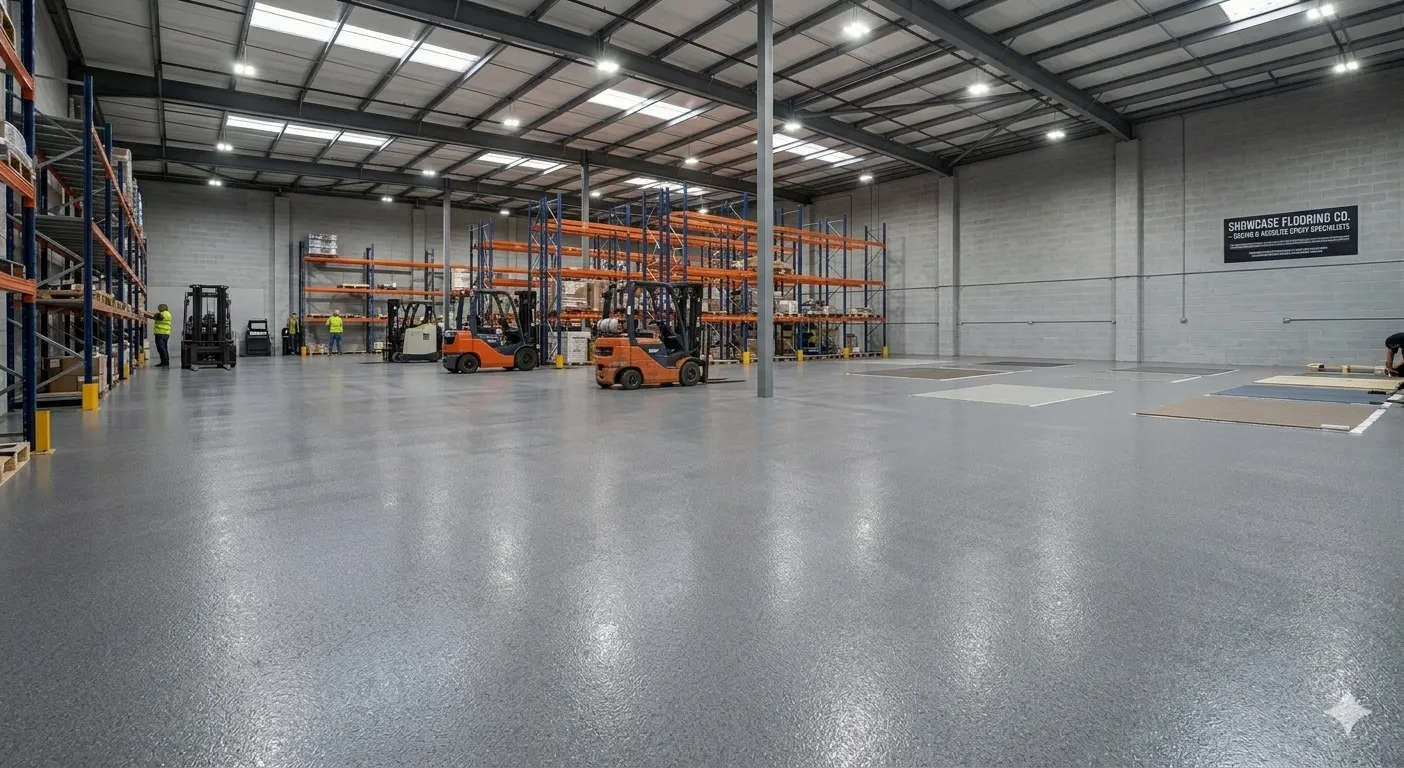
Why Florida Businesses Are Switching to Commercial Epoxy Flooring
From Tampa warehouses to Orlando restaurants, commercial epoxy flooring is becoming the go-to solution for Florida business owners who want durability, safety, and a professional appearance.
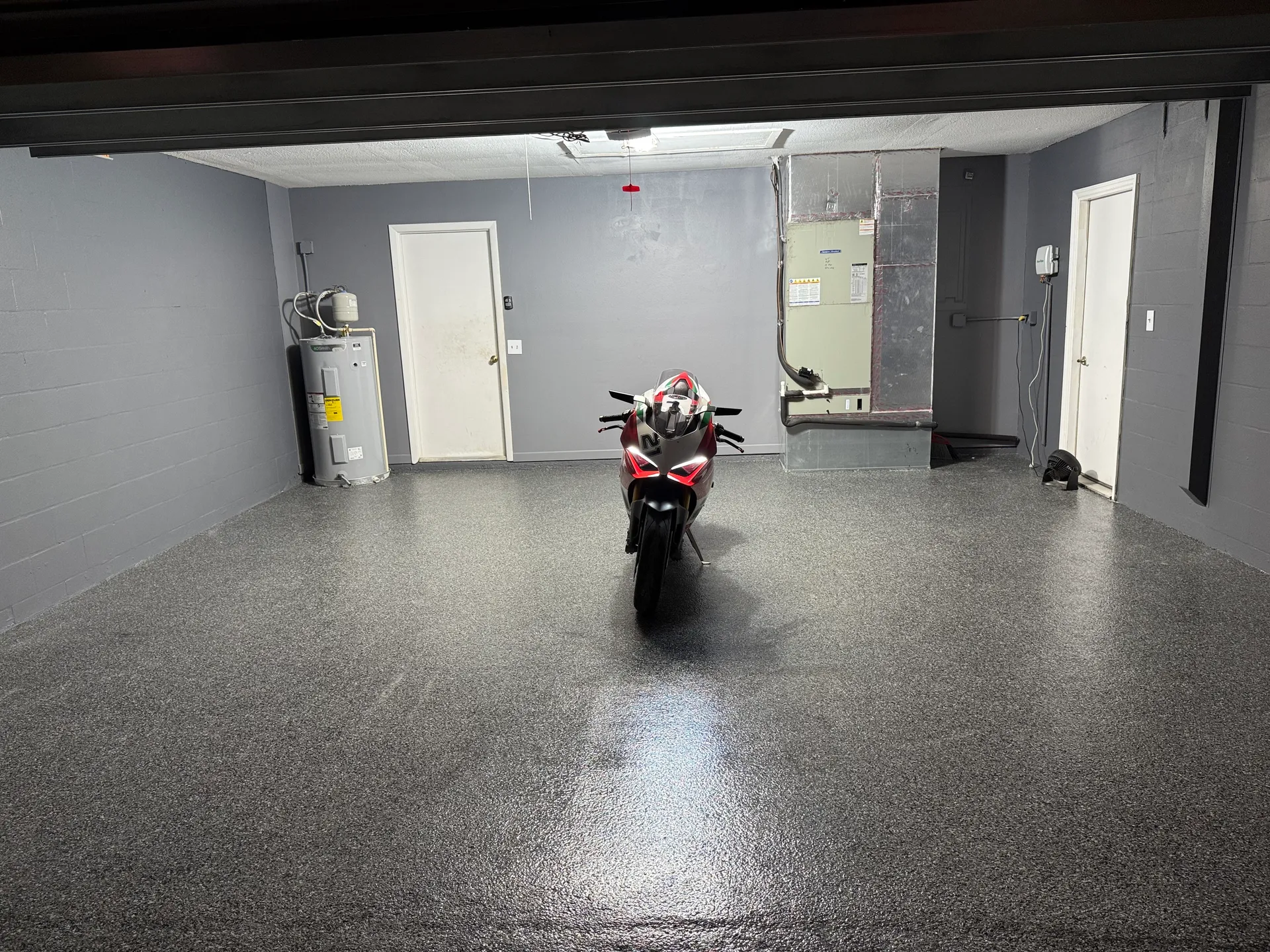
Polyaspartic vs Epoxy Garage Floors in Florida: Which Actually Lasts Longer?
Polyaspartic vs epoxy in Florida garages: which actually lasts longer under UV, humidity, and heat? A Brooksville installer breaks down the honest answer.
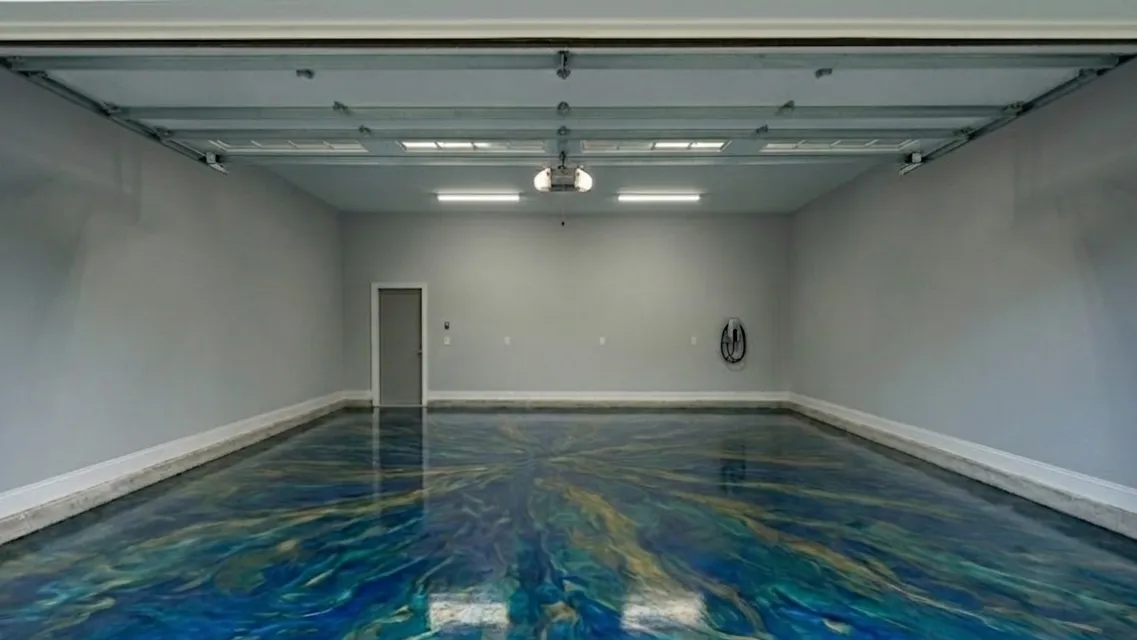
How Long Does Epoxy Flooring Actually Last in Florida? An Honest Lifespan Guide
How long does epoxy flooring last in Florida? An honest answer: 15-20+ years for pro systems, 2-4 for DIY kits. Here's what really drives lifespan.
Ready to Transform Your Floor?
Get a free, no-obligation quote today. We respond within 24 hours.