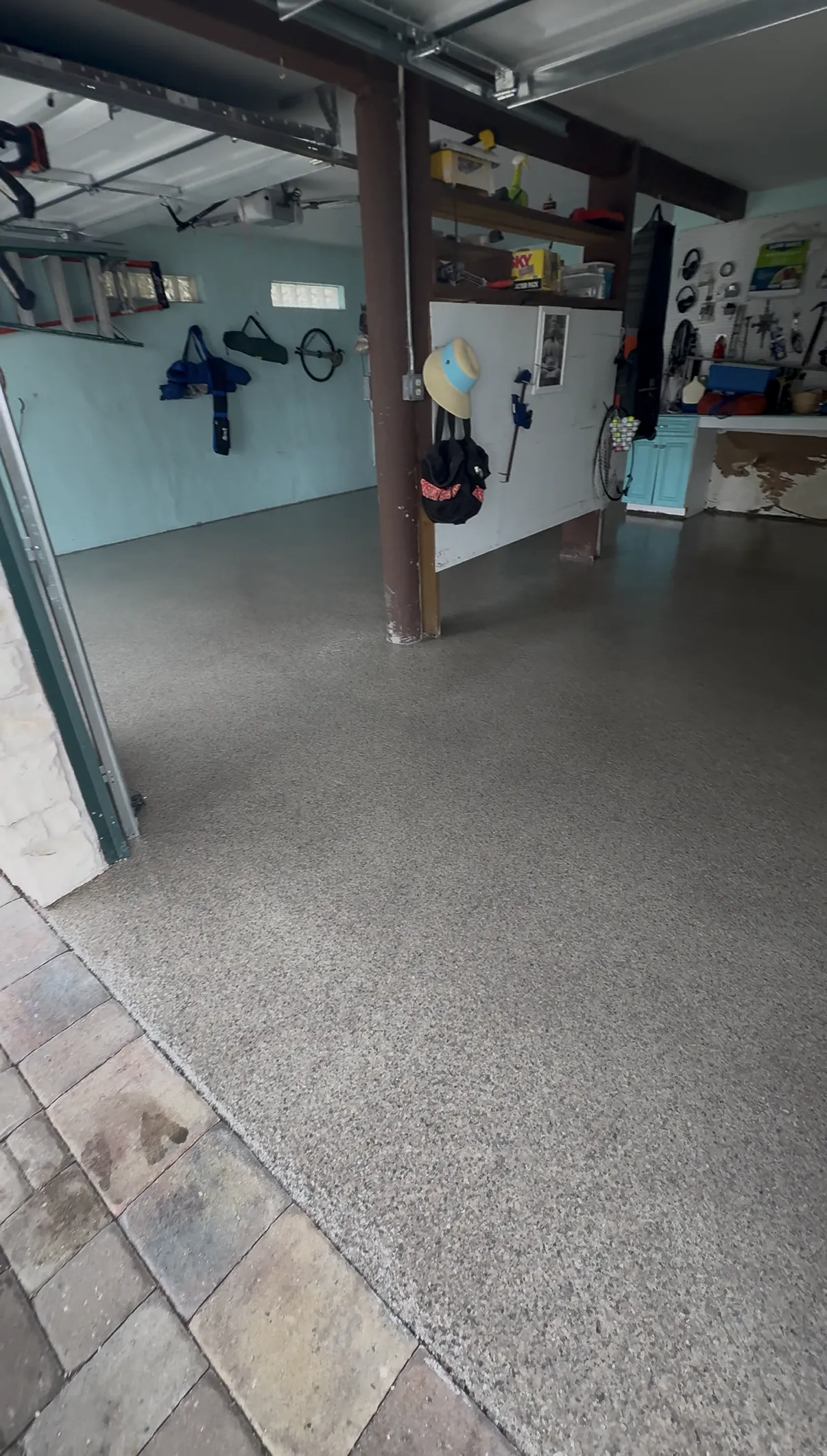
Epoxy Floor Cost Per Square Foot in Florida (2026): Real Pricing by Project Type
If you're searching for the real epoxy floor cost per square foot in Florida for 2026, you're in the right place. Most quality installs run between $4 and $15 per square foot, but that range hides huge differences between project types and systems. I'm Jake McIlrath, owner and lead installer at LuxeVita Epoxy, and this guide breaks pricing down by the actual project you're shopping for — garage, pool deck, lanai, commercial. For the bigger-picture view of what drives those numbers, see our broader Florida epoxy cost overview. This post zooms in.
The Honest Answer: Range and Why Pricing Varies So Much
Across every project we quote in Florida, installed epoxy and polyaspartic floors land somewhere between $4 and $15 per square foot. That's a 3.75x spread, and it's not arbitrary. The system chemistry, the prep required, the slab condition, and the design (solid color vs. flake vs. metallic) all swing the number.
Here's the truth most installers won't say out loud: anyone who gives you a flat per-square-foot number over the phone without seeing your slab is guessing. A 450 sqft garage with a clean 5-year-old slab is a completely different job than a 450 sqft garage with three repaired cracks, a saltwater-spalled apron, and a failed roller paint coating that needs to be ground off. Same square footage, two very different prices.
For the underlying "what affects pricing" factors — slab age, coatings to remove, decorative complexity — read the broader overview. Below, I'll show you what real projects actually cost.
Pricing by Project Type
These are the ranges we actually quote in 2026 for projects across Central and West Florida. The "typical project total" assumes average slab condition — meaning minor crack repair, standard moisture levels, and no major coating removal.
| Project | System | Typical $/sqft | Typical project total |
|---|---|---|---|
| 2-car garage (~450 sqft) | Flake epoxy | $5–$8 | $2,250–$3,600 |
| 2-car garage (~450 sqft) | Polyaspartic flake | $7–$11 | $3,150–$4,950 |
| 3-car garage (~700 sqft) | Metallic epoxy | $8–$13 | $5,600–$9,100 |
| Pool deck (~600 sqft) | Cool-touch flake | $8–$14 | $4,800–$8,400 |
| Lanai (~300 sqft) | Flake or solid | $6–$10 | $1,800–$3,000 |
| Commercial warehouse | Solid color / quartz | $4–$9 | varies by sqft |
| Restaurant kitchen | NSF quartz w/ cove | $10–$18 | varies |
Read the ranges as ceilings and floors, not averages. You'll land at the low end if your slab is in great shape, the project is straightforward, and you're choosing a standard color flake. You'll land at the high end if your slab needs repair, you want a premium polyaspartic topcoat, or you're choosing a custom decorative system like metallic or full-broadcast quartz. Most homeowners end up in the middle of the range.
What Drives Cost Up
- System chemistry. Polyaspartic is 30–50% more expensive than straight epoxy because the material itself costs more and cures faster (1-day install vs. 2–3 days). See the full breakdown in our polyaspartic vs. epoxy comparison.
- Slab repair. Cracks, spalls, pitting, and divots all need to be ground out and filled before coating. Heavy crack repair can add $1–$3/sqft.
- Coating removal. Existing paint, sealer, or failed epoxy must be mechanically removed. That's an extra grinding pass and consumable wear — typically $1–$2/sqft.
- Moisture mitigation. Florida slabs that test high for moisture vapor need a mitigation primer. Adds $1–$2/sqft, but skipping it guarantees failure.
- Decorative complexity. Metallic floors, custom logos, multi-color flake blends, and quartz broadcasts all add labor and material cost.
- Coastal salt damage. Garages within a mile or two of the coast often have salt-spalled concrete that needs extensive surface repair before any coating can bond.
- Access and logistics. Tight garage doors, second-story lanais, and after-hours commercial work all add cost.
What Drives Cost Down
- Clean, newer slab. A 3–7 year old residential slab with no prior coatings is the cheapest substrate to work with.
- Solid color over decorative. A single-pigment solid color costs less than full flake broadcast or metallic.
- Larger square footage. Mobilization is a fixed cost. A 2,000 sqft commercial floor costs less per square foot than a 200 sqft mudroom.
- Booking in shoulder season. May–June and October–November are quieter in Florida (compared to snowbird-driven winter demand), and pricing can be more flexible.
- Bundling projects. Quoting your garage and lanai together is cheaper than two separate trips.
The Cheap Quote Trap
Florida is full of $1.99/sqft "garage floor specials." Here's what those quotes are actually selling you:
- Roller-applied paint, not a real coating. Pretty much always single-coat consumer-grade epoxy paint rolled on without proper prep.
- No grinding. They'll acid-etch instead, which doesn't open the concrete profile enough for a real bond. The coating peels in 6–18 months — faster in Florida humidity.
- No moisture testing. Slab moisture is the #1 killer of coatings in Florida and they're skipping the test entirely.
- No written warranty. Or a "warranty" with so many exclusions it's meaningless.
- Full payment up front. Reputable installers take a deposit, not the full balance.
The reason real installers can't compete with $1.99/sqft isn't margin — it's that the material alone for a proper polyaspartic flake system costs more than $1.99/sqft. There's no version of "cheap epoxy that lasts" in Florida. To understand why mechanical prep is non-negotiable in our climate, read our deep-dive on why surface preparation matters.
What's Actually Included in a Quality Install
When you compare quotes, line items matter more than the bottom-line price. A real LuxeVita quote — and any quality installer's quote — itemizes the following:
- Diamond grinding or shot-blasting. Mechanical surface profiling to CSP-2 or CSP-3. Not acid etching, not pressure washing.
- Crack and spall repair. Routing out cracks, filling with polyurea or epoxy mortar, repairing spalled edges and control joints.
- Moisture testing. Calcium chloride or in-situ RH testing on slabs over 5 years old or anywhere with known moisture history.
- Primer / basecoat. A bonding coat appropriate to the slab and system.
- Full broadcast. Color flake or quartz blown to refusal, then scraped and vacuumed clean.
- Topcoat. Polyaspartic or polyurethane — UV-stable, abrasion-rated, the layer doing the actual long-term work.
- Cleanup & cure window. Job-site cleanup and clear instructions on foot traffic and vehicle return.
If your quote doesn't show these line items, ask for them in writing. You're not being difficult — you're protecting a four-figure investment.
Florida-Specific Cost Drivers
A few cost factors hit Florida harder than other markets, and they're worth budgeting for. Slab age is the big one: 1970s and 1980s Florida slabs often have unreinforced control joints and hairline cracking that needs more repair than a newer slab. Hurricane-zone garages frequently have moisture intrusion from old wind-driven rain events — you can't see it, but a moisture test will catch it.
Coastal salt is the silent budget killer. If you're within a mile of saltwater, your garage slab is likely spalling from chloride attack even if it looks fine. We see this constantly in coastal Pinellas, Sarasota, and Brevard County jobs — the slab needs significant surface repair before any coating goes down.
Financing & Payment Options
For larger residential projects (3-car garages, full lanais, pool decks) and commercial work, LuxeVita Epoxy offers financing options so you don't have to pay the entire investment up front. We can walk through monthly payment ranges during your quote.
For payment structure on cash projects: a deposit at booking secures your date, and the balance is due on completion — not before. Any installer asking for the full amount up front is a red flag, every time.
Getting an Accurate Quote
The only way to get a real number is an on-site assessment. We measure the actual square footage, check the slab condition, look for prior coatings, identify any moisture or salt-damage issues, and walk you through the system options that fit your budget. Quotes are free, written, and itemized — no high-pressure sales calls.
Frequently Asked Questions
What is the average epoxy floor cost per square foot in Florida in 2026?
Most quality residential installs run $5 to $13 per square foot installed. Flake epoxy garages sit at $5–$8/sqft, polyaspartic systems run $7–$11/sqft, and metallic or pool deck systems land $8–$14/sqft. Anything under $4/sqft is almost always a roller-applied paint job with no grinding, and it will fail.
How much does a 2-car garage epoxy floor cost in Florida?
A typical 450-square-foot 2-car garage runs $2,250 to $3,600 for a quality flake epoxy system, or $3,150 to $4,950 for a premium polyaspartic-topcoat flake system. Price varies based on slab condition, crack repair, and whether previous coatings need to be removed.
Why are some epoxy quotes so much cheaper than others?
Cheap quotes (under $3/sqft) almost always skip diamond grinding, use single-coat roller paint, and offer no warranty. They look fine for 6–18 months, then peel — especially in Florida humidity. A real installed epoxy system includes grinding, crack repair, moisture testing, basecoat, broadcast, and topcoat.
Does Florida humidity affect epoxy pricing?
Yes. Florida slabs almost always require moisture vapor testing before coating, and some need a moisture-mitigation primer that adds $1–$2/sqft. Coastal salt-spalled garages and older slabs with hidden moisture issues are the biggest hidden cost drivers in our market.
What's included in a quality epoxy install quote?
A proper quote itemizes: mechanical surface prep (diamond grinding or shot-blasting), crack and spall repair, moisture testing, basecoat, full flake or pigment broadcast, polyaspartic or polyurethane topcoat, and cleanup. If those line items aren't in your quote, you're not comparing apples to apples.
Does LuxeVita Epoxy offer financing for larger projects?
Yes. For larger residential and commercial projects we offer financing options so you can spread payments out rather than paying everything up front. We never ask for full payment before the job — a deposit at booking and the balance on completion is standard.
Ready to Transform Your Floor?
LuxeVita Epoxy LLC installs premium epoxy flooring across Brooksville, Tampa, and all of Central & West Florida. Every job is licensed, insured, and backed by professional surface preparation. Get a free, no-obligation quote today — we respond within 24 hours.
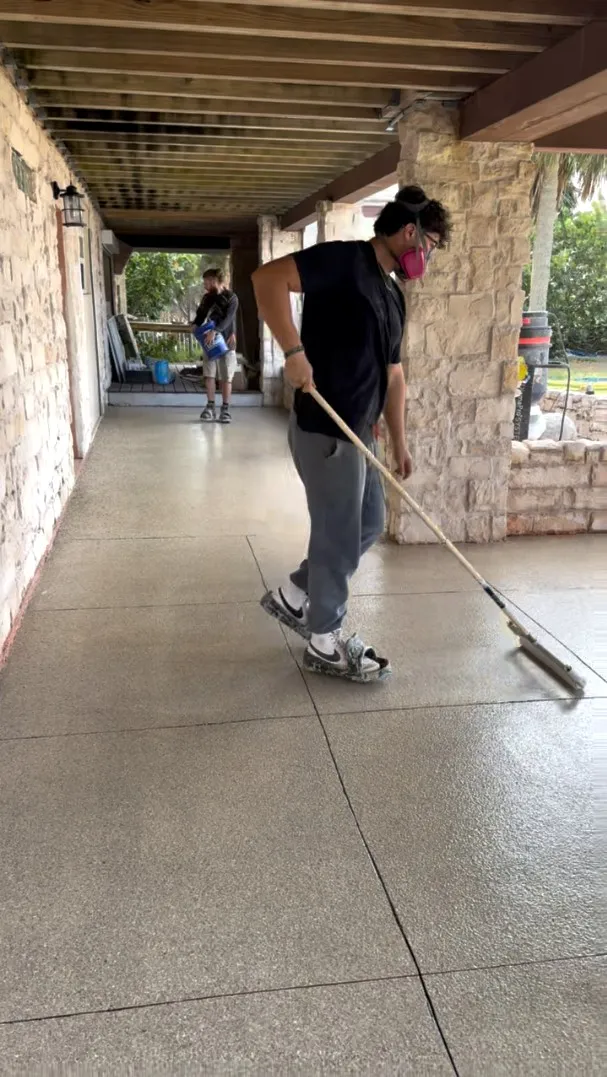
Jake McIlrath
Owner & Lead Installer, LuxeVita Epoxy LLC
Jake leads every LuxeVita install personally, bringing hands-on experience with Florida slabs, climate, and the prep that makes epoxy last. He writes here to help homeowners and businesses make informed flooring decisions.
Related Articles
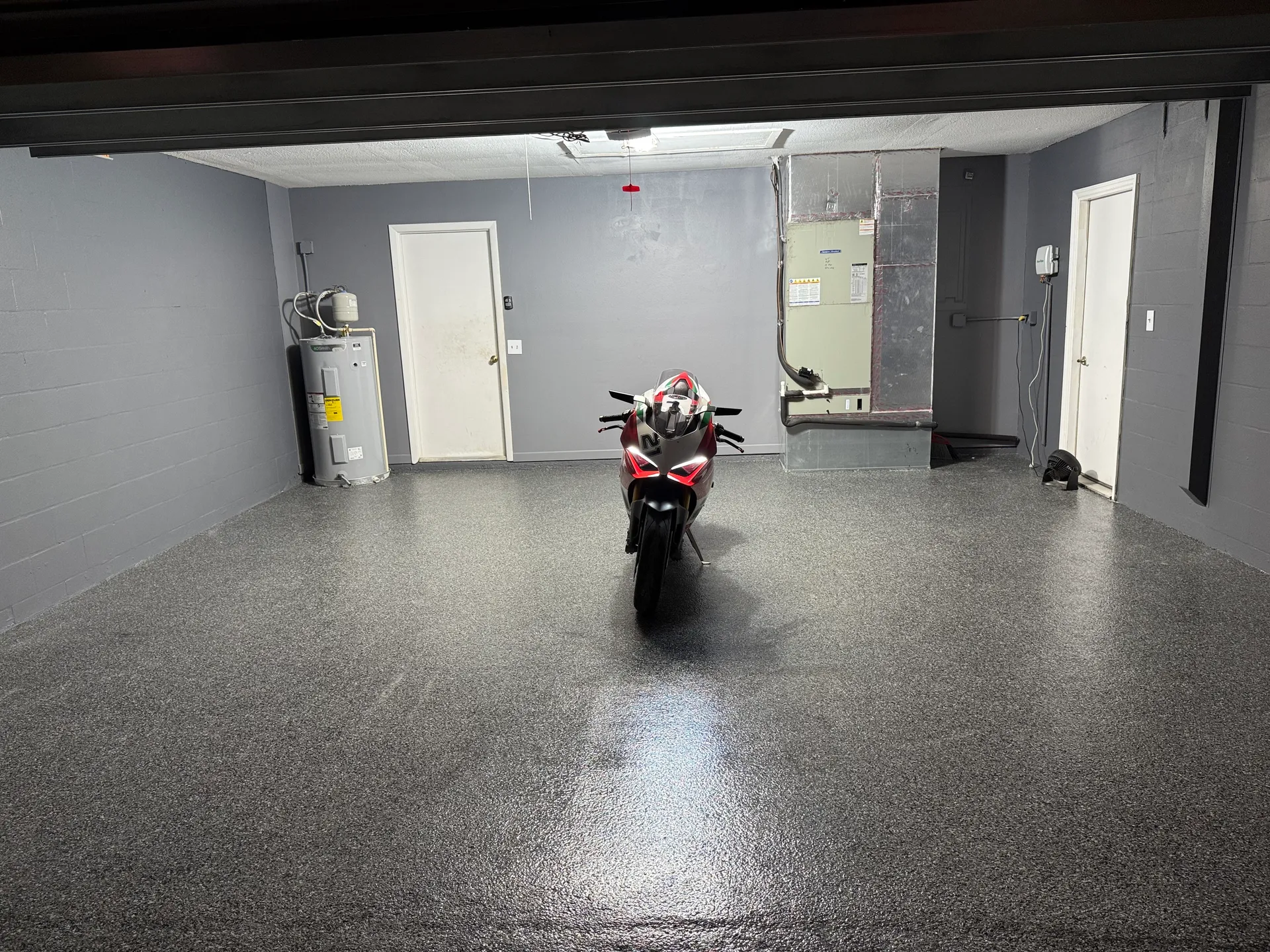
Polyaspartic vs Epoxy Garage Floors in Florida: Which Actually Lasts Longer?
Polyaspartic vs epoxy in Florida garages: which actually lasts longer under UV, humidity, and heat? A Brooksville installer breaks down the honest answer.
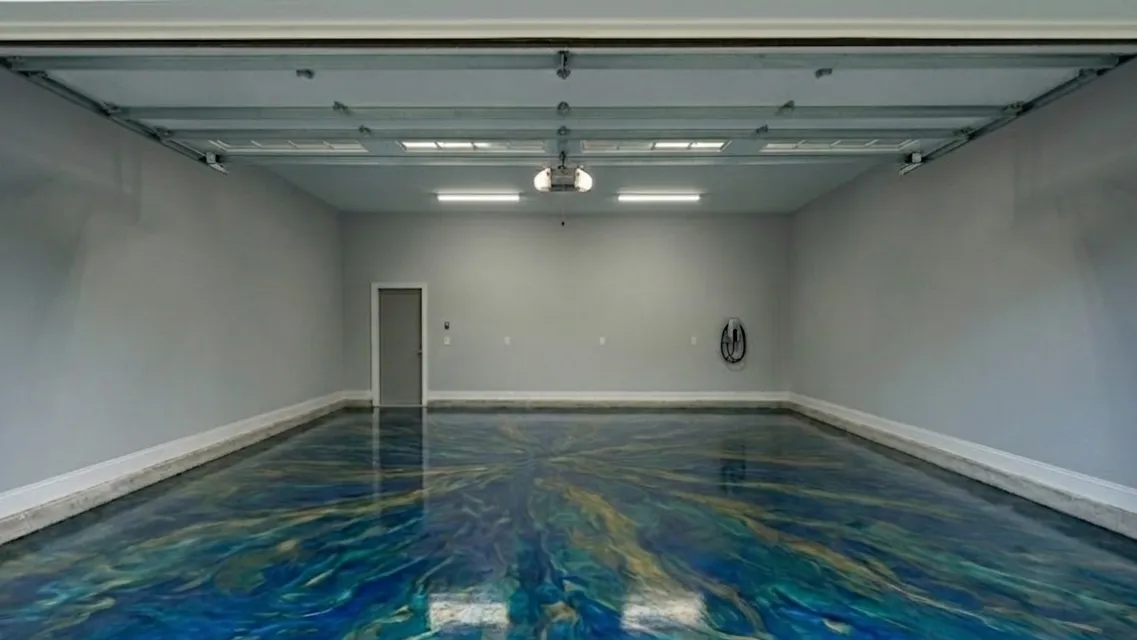
How Long Does Epoxy Flooring Actually Last in Florida? An Honest Lifespan Guide
How long does epoxy flooring last in Florida? An honest answer: 15-20+ years for pro systems, 2-4 for DIY kits. Here's what really drives lifespan.
Lanai Floor Coating: The Florida Patio Upgrade Most Homeowners Overlook
A professional lanai floor coating turns your screened Florida patio into real living space — cooler, cleaner, and built for storms and pollen.
Ready to Transform Your Floor?
Get a free, no-obligation quote today. We respond within 24 hours.