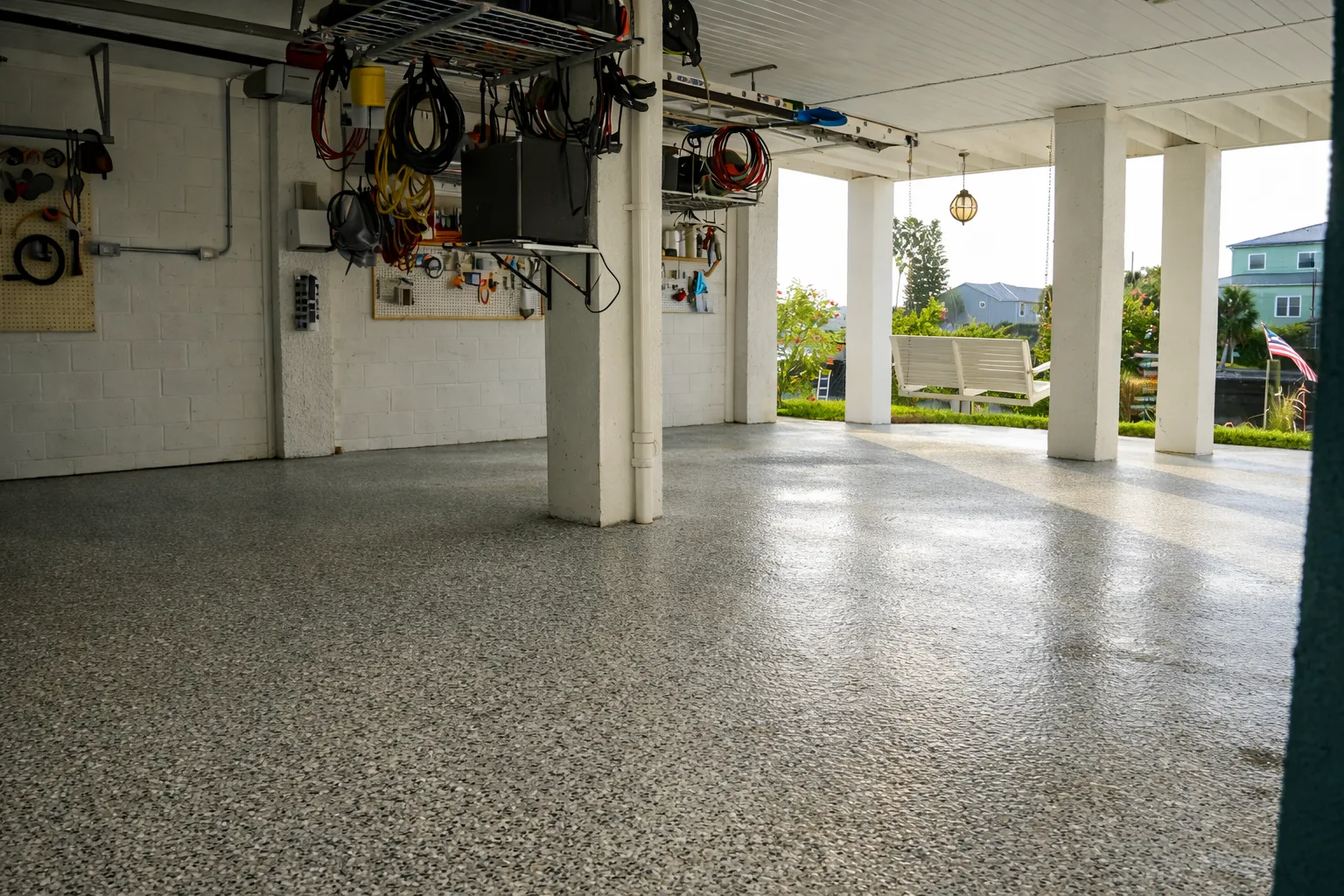
Lanai Floor Coating: The Florida Patio Upgrade Most Homeowners Overlook
If you live in Florida, your lanai is basically a second living room — except the floor is usually raw concrete that gets dusty, stained, and slick the moment a summer storm rolls through. A professional lanai floor coating fixes all of that in two days and turns the most-used part of your house into the best-looking part. Here is exactly how it works, what it costs, and how to choose the right system for a Florida outdoor space.
What Is a Lanai (and Why Its Flooring Matters More Than You Think)
For anyone outside the state: a lanai is Florida-speak for a screened-in or covered patio attached to the back of the house. They are everywhere — well over 80% of single-family homes built in Central and West Florida have one, and most pool homes have a large screened cage covering both the deck and the pool.
The lanai is where families actually live. Morning coffee, grilling, kids' birthday parties, watching storms roll in over the Gulf. It gets more daily foot traffic than any other room in the house. And yet, the floor is almost always whatever the builder threw down: a thin broom-finished slab, sometimes a cheap painted coating from the 2000s, occasionally pavers that have shifted and grown weeds in the joints.
You spend money on outdoor furniture, a grill, maybe a TV out there. Then you stand on a floor that looks like a sidewalk. A coating is the upgrade that makes everything else feel finished.
The Hidden Problems with Bare Concrete Lanais
Untreated concrete in Florida fights a losing battle. The first thing it does is dust. Walk barefoot for ten minutes and your feet are gray. That powder is calcium and silica working its way out of the slab, and it tracks straight into your house every single day.
Then there is the staining. Pollen season (looking at you, March through May) turns yellow into a permanent mottled mess on porous concrete. Rust rings from patio furniture. Hard water spots from the screen getting rinsed. Mildew lines where shade meets sun. Once those stains soak in, no pressure washer in the world is getting them out.
Surface temperature is another issue most folks ignore until they stub a toe on a hot afternoon. Bare gray concrete reflects light but still climbs into uncomfortable territory in July. And when it rains — which is daily for half the year — that broom-finish slab becomes genuinely slick, especially right around the slider where shoes track water.
Finally, the look. Factory concrete is institutional. It is the same finish you see at a gas station. After investing in a beautiful home, that floor is the weakest link in your outdoor space.
Coating Options for Lanais
Not every coating belongs outside. Here are the systems I install on Florida lanais, and the real-world tradeoffs of each.
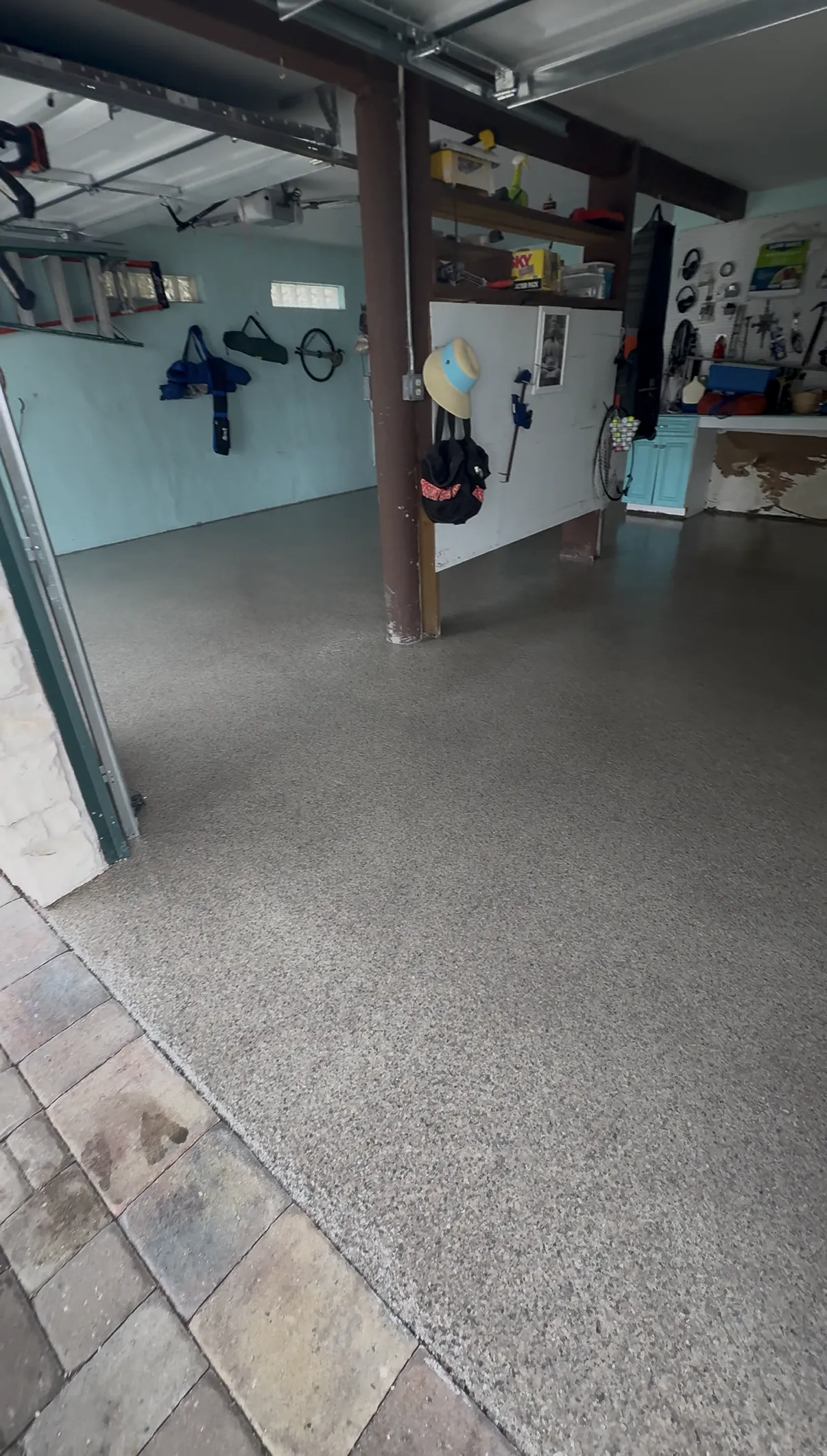
1. Decorative flake (chip) system. This is my most popular recommendation for lanais. A pigmented base coat goes down, then we broadcast colored vinyl flakes into the wet resin until refusal, scrape it smooth the next day, and lock everything in with a UV-stable polyaspartic top coat that includes a fine aggregate for grip. The texture hides dirt between sweepings, the flakes hide minor slab imperfections, and the surface stands up to dragged chairs, dog nails, and pollen rinses.
2. Metallic epoxy. Stunning under a screened roof — the diffused light brings out the depth and movement in a way direct sun actually washes out. Best for covered or fully screened lanais where the homeowner wants a high-end "indoor" look that flows from a finished interior. If this is the direction you are leaning, read the complete metallic epoxy guide and check out our metallic epoxy service page for example finishes. Note that metallic needs an aggregate top coat outdoors for slip safety.
3. Solid color polyaspartic. Simple, modern, clean. A single pigmented coating in a soft gray, sand, or warm taupe with a non-slip top coat. This is the budget-friendly option and the easiest to color-match to interior LVP or tile. It will not hide slab imperfections the way flake does, so the concrete needs to be in decent shape.
4. Polyaspartic-only fast cure. For homeowners who cannot tolerate two days of disruption (rare on a lanai, common in rental scenarios), we can install a 100% polyaspartic single-day system. Higher material cost, slightly fewer design options, but you walk on it the same evening.
Design Choices: Flake, Metallic, Solid Color
For most Florida lanais, I steer clients toward a warm neutral flake blend — think sandstone, driftwood, or a soft pewter. These hide pollen and dirt between cleanings, complement screen-cage views, and never clash with whatever furniture or cushions you swap in over the years.
On lighter blends, even afternoon sun stays barefoot-friendly. Darker blends (espresso, charcoal, black-and-copper metallic) look incredible but absorb heat. If your lanai gets four-plus hours of direct sun even through the screen, go lighter or plan to rug the high-sun zones.
Metallic is the show-stopper option. A pearl white with copper veins, or a slate gray with silver swirl, makes a covered lanai feel like a luxury hotel pool deck. Just remember: metallic relies on flow patterns, so it needs a perfectly flat substrate and a skilled installer. It is not a forgiving system.
Indoor-Outdoor Color Matching with Your Main House
This is the question I get asked on nearly every estimate: "Can you match the lanai to my kitchen floor?"
Yes — and getting it right is more art than science. Florida homes lean heavily on cool gray LVP and large-format porcelain tile, which were laid under artificial light. Once that color sits next to natural daylight on a covered lanai, the same gray can suddenly read blue or purple. The fix is sampling on site.
I bring physical 12x12 inch sample boards in the three or four closest blends, lay them on your actual slab, and we look through the slider together at the time of day you use the space most. Nine times out of ten the homeowner picks something one or two shades warmer than what they thought they wanted on a screen.
The goal is not an exact match — it is a flowing transition. When the colors are in the same family and the value (light vs. dark) is close, the sliding glass disappears visually. The lanai stops being "outside" and becomes a continuation of the living room. That is the upgrade.
Cost Expectations
For a typical Florida lanai between 200 and 400 square feet, expect ranges roughly like this:
- Solid color polyaspartic: $7–$9 per square foot installed
- Decorative flake system: $8–$11 per square foot installed
- Metallic epoxy with non-slip top coat: $11–$15 per square foot installed
Smaller lanais (under 250 square feet) often hit a project minimum — usually somewhere around $2,200 to $2,800. The reason is simple: a 200 sqft lanai requires the same diamond grinder, the same crew, the same drive time, and nearly the same prep hours as a 350 sqft job. Per-foot pricing drops fast as the space gets larger because those fixed costs spread out.
Add-ons that move the price: severe slab repair, removing failed previous paint or sealer, a moisture mitigation primer if your slab tests high (common on older homes), or custom multi-color borders. We go through every line item before you sign, so there are no surprises.
Want a deeper breakdown of how epoxy pricing works generally? Read our full Florida epoxy cost guide.
One last thing worth mentioning: a lanai coating is a 15-to-20-year investment when it is installed and maintained correctly. The maintenance side is almost embarrassingly easy — rinse with a hose, mop once a month, never use harsh acids. Full details are in our epoxy maintenance guide.
Frequently Asked Questions
Can you coat a lanai floor that already has paint on it?
Yes, but the old paint almost always has to come off first. We diamond grind the slab down to clean concrete so the new coating bonds chemically rather than sitting on top of failing paint. Skipping that step is why most DIY lanai jobs peel within a year — the new coating is only as strong as whatever it is bonded to.
Will a lanai coating get too hot to walk on barefoot?
Under a screen enclosure or covered patio, no. Light to medium colors stay comfortable even in July. Fully exposed concrete in direct sun can get warm with any dark coating, so we steer those clients toward lighter flake blends or neutral solid colors. We talk through sun exposure during the estimate.
Is the surface slippery when it rains or after pool splash-over?
Not when it is built correctly. We add a fine aggregate into the top coat for outdoor and pool-adjacent areas. It creates an invisible texture that grips wet feet without feeling rough underfoot or trapping dirt. Big upgrade over wet bare concrete.
How long does a lanai coating last in Florida sun and humidity?
A properly prepped lanai with a UV-stable polyaspartic top coat will look great for 15 to 20 years with basic maintenance. The screen filters most direct UV, which actually helps longevity. Color stability is dramatically better than any solvent-based paint or store-bought sealer.
How long is the lanai out of commission during installation?
Most lanais are done in two days. You can usually walk on the floor 24 hours after the top coat goes down and place furniture back after 72 hours. We schedule around weather, since outdoor work depends on dry conditions and stable humidity.
Can the lanai floor match the tile or LVP inside my house?
Yes, and this is one of our most popular requests. We bring physical color samples to your home and stage them against your interior flooring in actual daylight before you commit. When done well, the sightline through the slider becomes seamless and your living space feels noticeably larger.
Ready to Transform Your Floor?
LuxeVita Epoxy LLC installs premium epoxy flooring across Brooksville, Tampa, and all of Central & West Florida. Every job is licensed, insured, and backed by professional surface preparation. Get a free, no-obligation quote today — we respond within 24 hours.
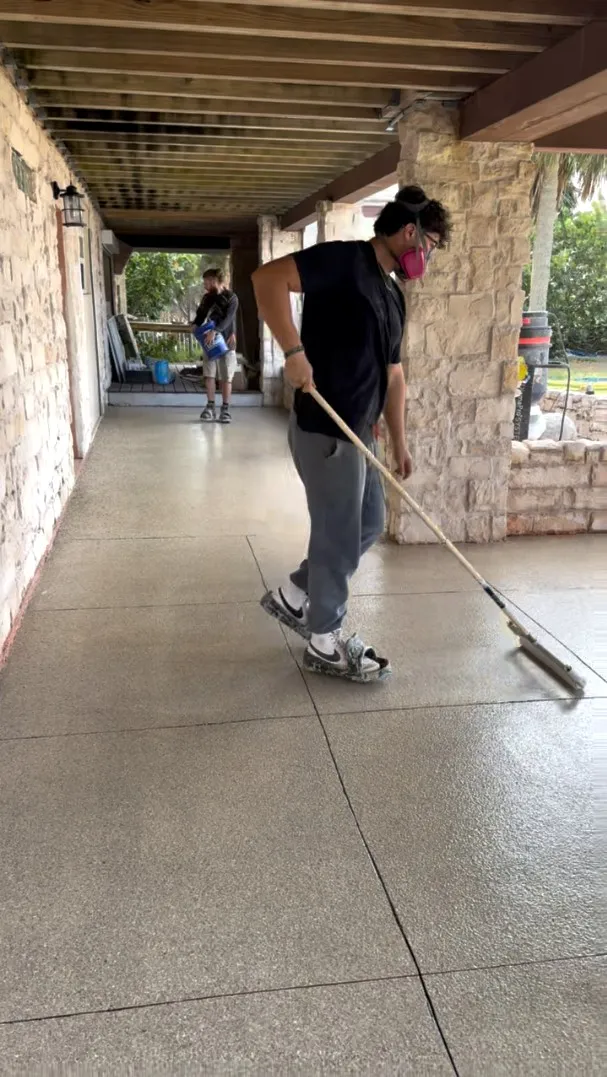
Jake McIlrath
Owner & Lead Installer, LuxeVita Epoxy LLC
Jake leads every LuxeVita install personally, bringing hands-on experience with Florida slabs, climate, and the prep that makes epoxy last. He writes here to help homeowners and businesses make informed flooring decisions.
Related Articles
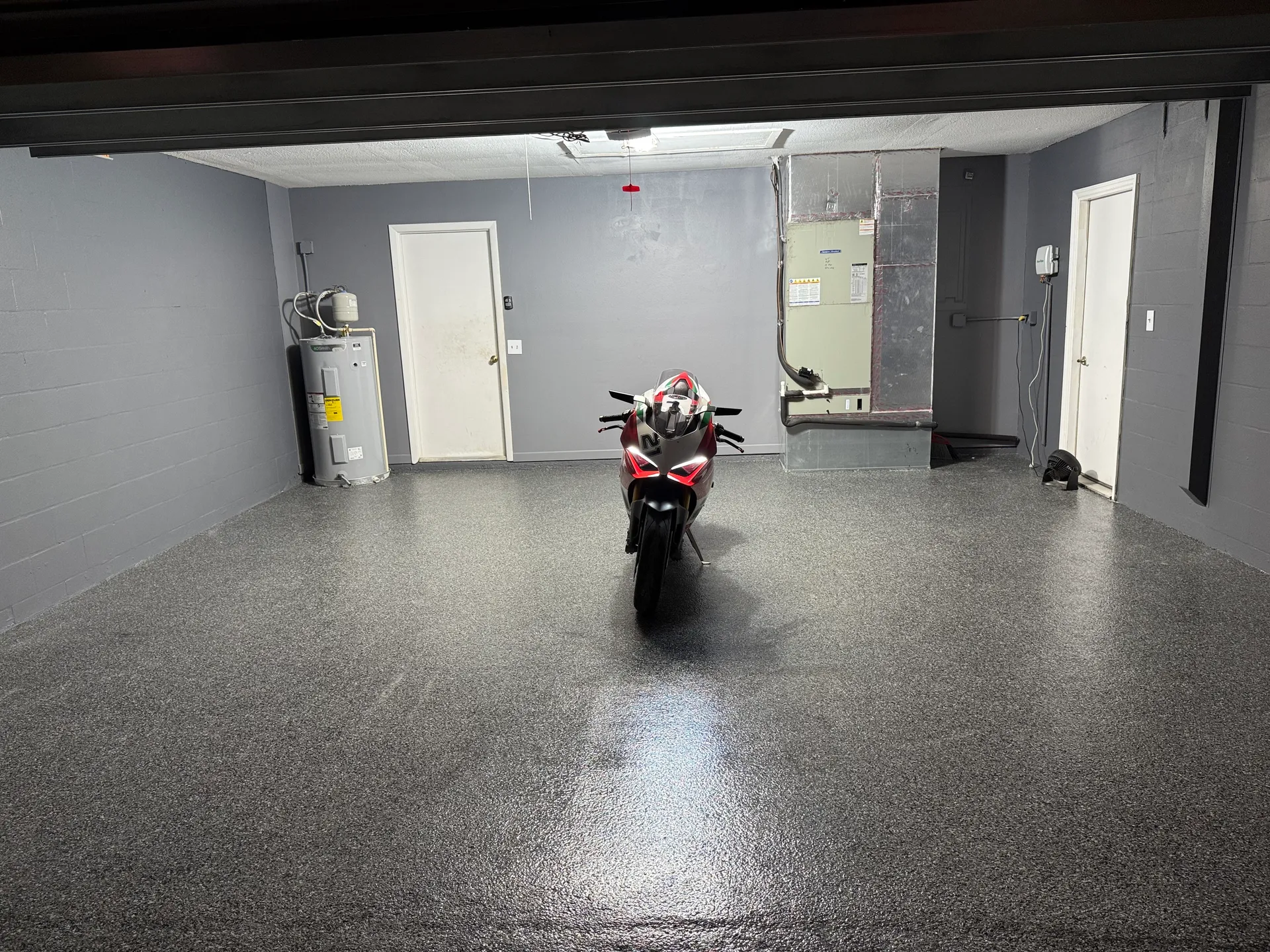
Polyaspartic vs Epoxy Garage Floors in Florida: Which Actually Lasts Longer?
Polyaspartic vs epoxy in Florida garages: which actually lasts longer under UV, humidity, and heat? A Brooksville installer breaks down the honest answer.
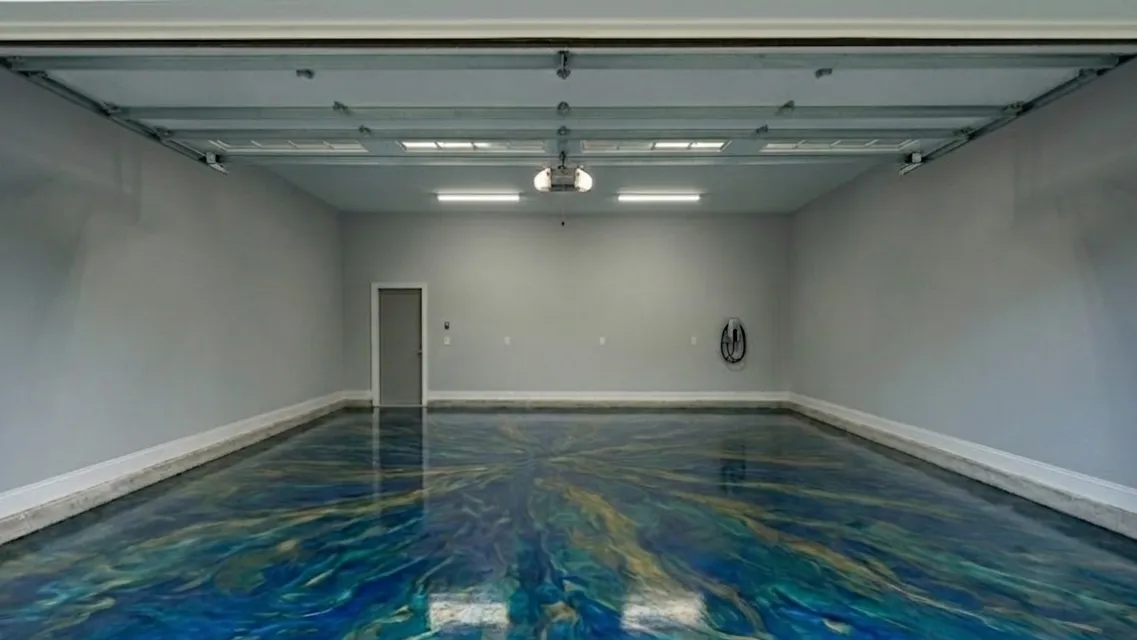
How Long Does Epoxy Flooring Actually Last in Florida? An Honest Lifespan Guide
How long does epoxy flooring last in Florida? An honest answer: 15-20+ years for pro systems, 2-4 for DIY kits. Here's what really drives lifespan.
Epoxy Floor Cost Per Square Foot in Florida (2026): Real Pricing by Project Type
Real 2026 Florida epoxy floor cost per square foot, broken down by project type — garages, pool decks, lanais, commercial, with honest dollar ranges.
Ready to Transform Your Floor?
Get a free, no-obligation quote today. We respond within 24 hours.