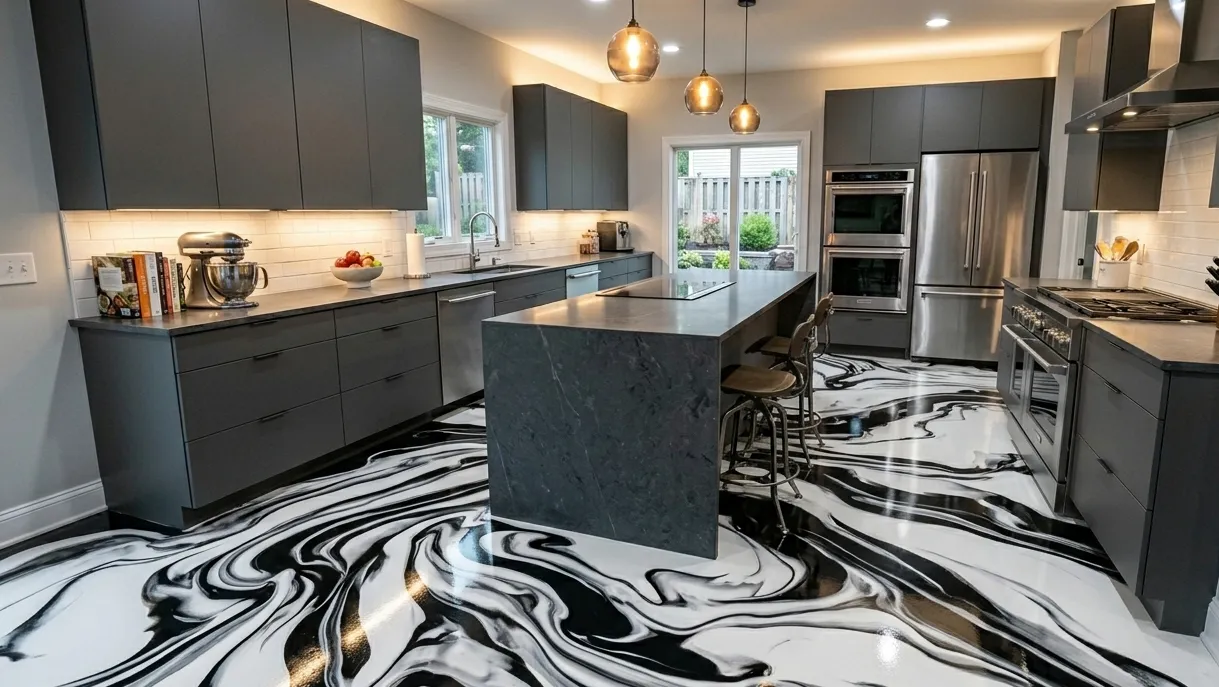
Metallic vs Flake Epoxy: Which System is Right for Your Space?
The two systems we install most often are metallic epoxy and flake (vinyl chip) epoxy. Both are excellent. They're just built for different priorities. Here's an honest side-by-side so you can pick the right one the first time.
The Visual Difference
Metallic epoxy creates a smooth, glossy, three-dimensional surface with flowing swirls and depth — it reads as luxury and is unmistakably custom. Flake epoxy has a speckled, terrazzo-like texture from thousands of vinyl chips broadcast into the coating. It looks clean, structured, and professional rather than artistic.
If you want a floor that makes people stop and ask about it, metallic wins. If you want a crisp, timeless, "this place is well-run" look, flake is hard to beat.
Durability and Performance
Both systems are extremely durable when properly installed, but they differ in feel and function:
- Flake has a slightly textured surface, which means better natural slip resistance — a real advantage in garages, patios, and wet areas.
- Metallic is smoother and glossier; slip resistance can be added with an anti-slip additive in the top coat if needed.
- Flake's texture and pattern hide minor dust, scratches, and imperfections better day-to-day. A metallic floor shows every footprint until it's wiped.
Cost Comparison
Flake systems are generally the more budget-friendly of the two. Metallic carries a premium because it's labor-intensive and artistic — the pattern is hand-worked in a single window and demands an experienced installer. For a tighter budget over a large area, flake delivers more covered square footage per dollar.
Best Use Cases for Each
- Garages: Flake is the workhorse choice — durable, slip-resistant, hides tire dust. Metallic is the showpiece choice for collectors and finished garages.
- Basements & living spaces: Metallic shines here — it photographs beautifully and elevates a room.
- Commercial & industrial: Flake (or a quartz system) for safety and easy maintenance.
- Patios & pool areas: Flake, for slip resistance and UV-stable color.
Maintenance Differences
Both are low-maintenance, but flake's texture is more forgiving between cleanings, while metallic rewards a quick regular wipe-down with a flawless mirror finish. Neither requires waxing. We cover routine care in our epoxy maintenance guide.
Quick Decision Checklist
Choose metallic if you said yes to most of these:
- This is a showcase space (finished garage, basement, retail, living area).
- A one-of-a-kind, high-end look is the priority.
- You're comfortable with occasional wipe-downs to keep the shine.
Choose flake if you said yes to most of these:
- It's a working garage, shop, patio, or commercial floor.
- Slip resistance and hiding everyday wear matter.
- You want maximum durable coverage for the budget.
Still torn? There's no wrong answer between these two — both will outlast bare concrete by decades. The "right" one is simply the one that matches how you'll actually use the room.
The best way to decide is to see physical samples of both in your own space and lighting. We bring sample boards to every consultation so you're never guessing.
Ready to Transform Your Floor?
LuxeVita Epoxy LLC installs premium epoxy flooring across Brooksville, Tampa, and all of Central & West Florida. Every job is licensed, insured, and backed by professional surface preparation. Get a free, no-obligation quote today — we respond within 24 hours.

Jake McIlrath
Owner & Lead Installer, LuxeVita Epoxy LLC
Jake leads every LuxeVita install personally, bringing hands-on experience with Florida slabs, climate, and the prep that makes epoxy last. He writes here to help homeowners and businesses make informed flooring decisions.
Related Articles
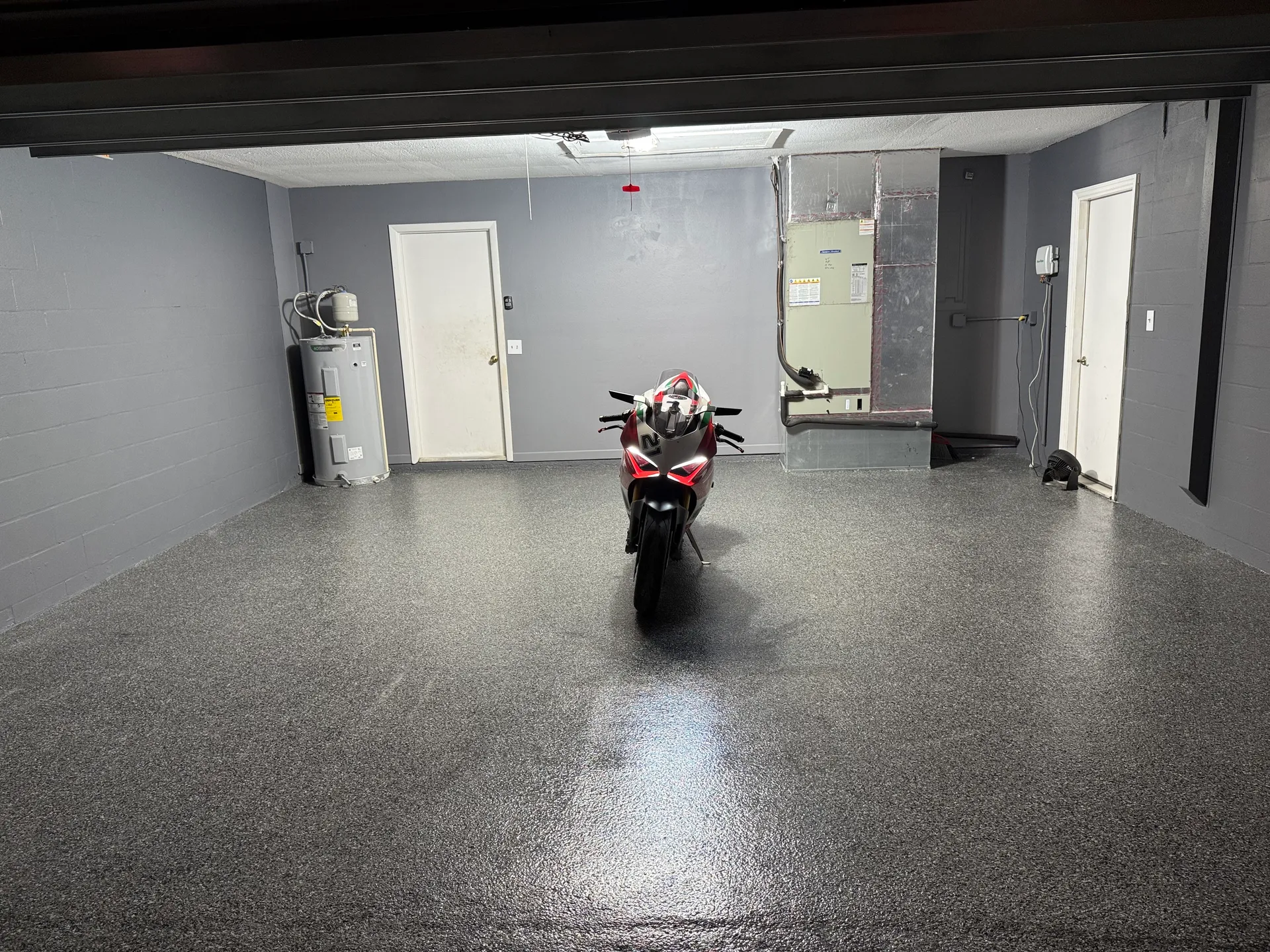
Polyaspartic vs Epoxy Garage Floors in Florida: Which Actually Lasts Longer?
Polyaspartic vs epoxy in Florida garages: which actually lasts longer under UV, humidity, and heat? A Brooksville installer breaks down the honest answer.
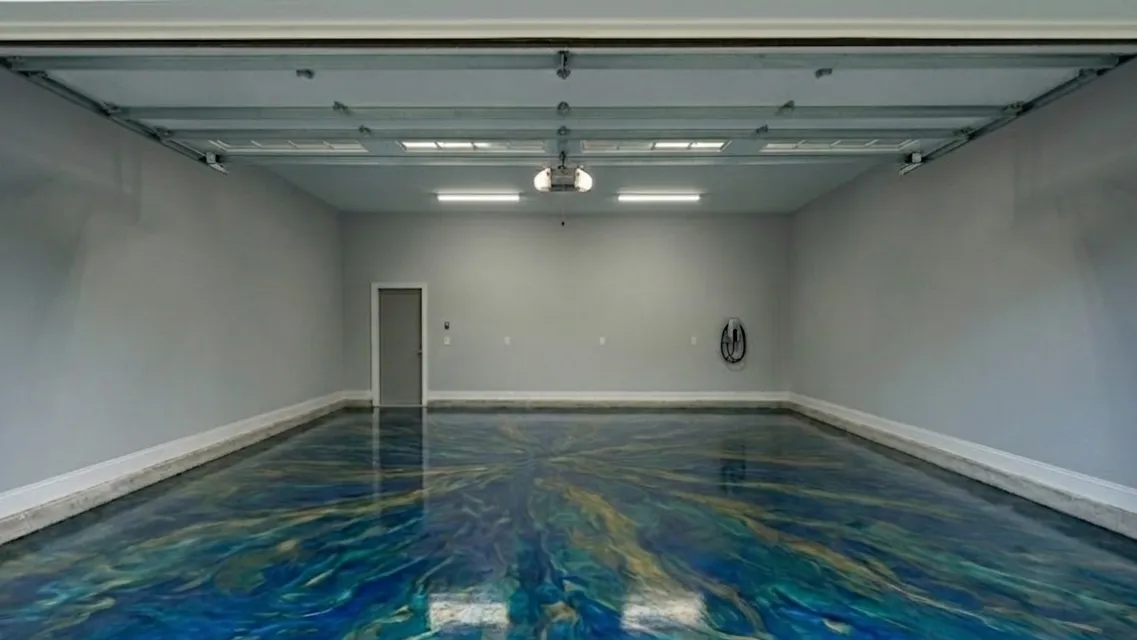
How Long Does Epoxy Flooring Actually Last in Florida? An Honest Lifespan Guide
How long does epoxy flooring last in Florida? An honest answer: 15-20+ years for pro systems, 2-4 for DIY kits. Here's what really drives lifespan.
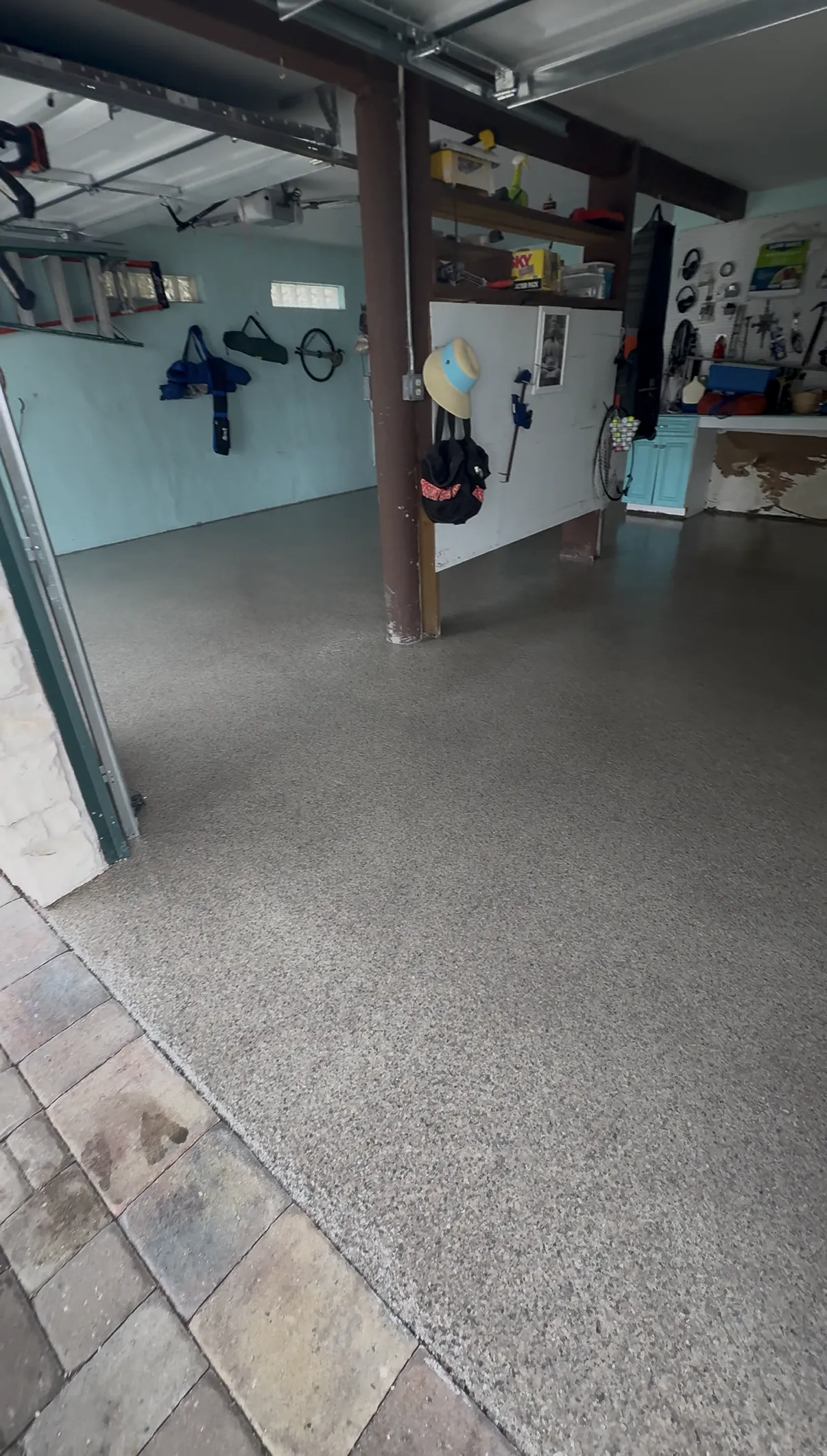
Epoxy Floor Cost Per Square Foot in Florida (2026): Real Pricing by Project Type
Real 2026 Florida epoxy floor cost per square foot, broken down by project type — garages, pool decks, lanais, commercial, with honest dollar ranges.
Ready to Transform Your Floor?
Get a free, no-obligation quote today. We respond within 24 hours.